
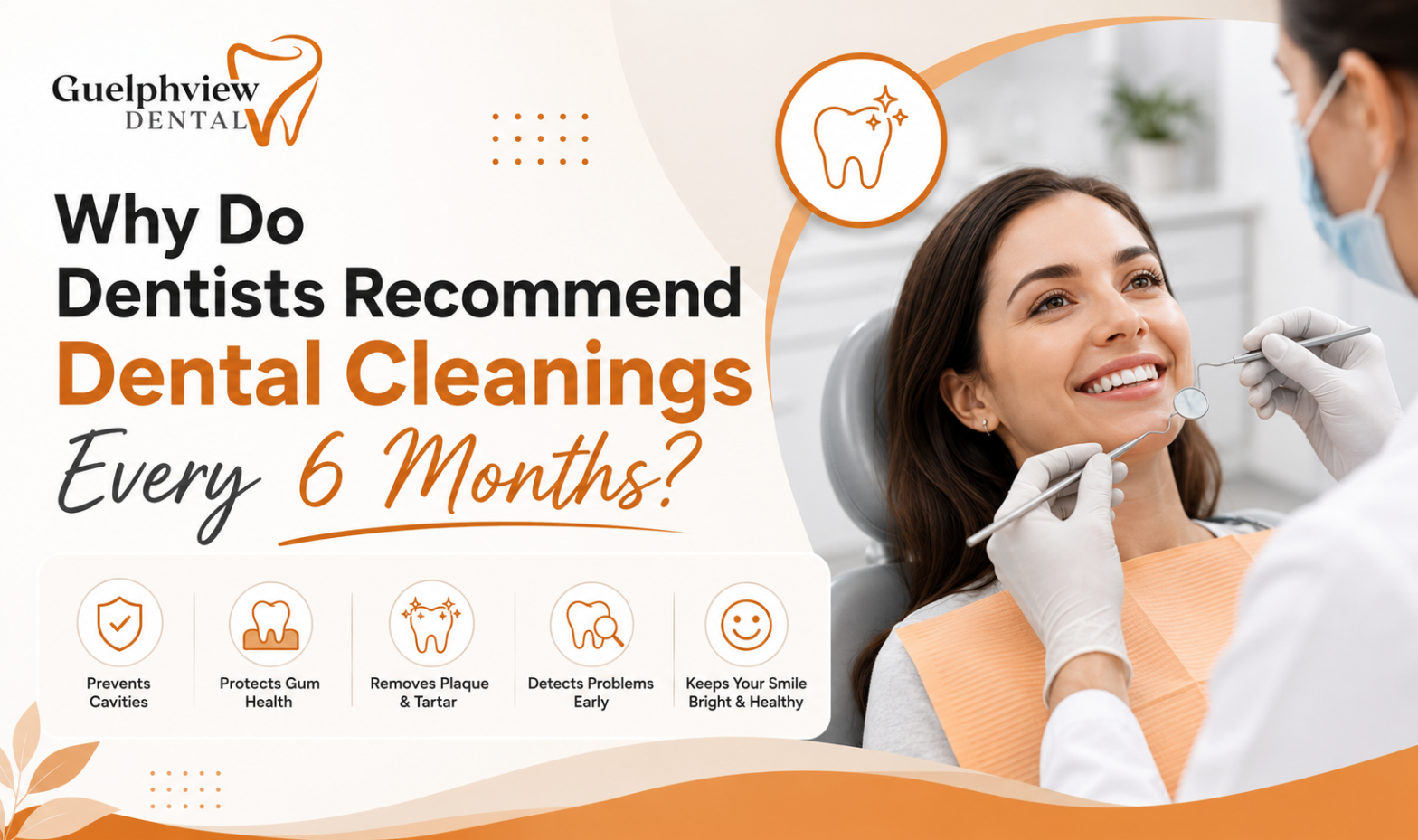
Why Do Dentists Recommend Dental Cleanings Every 6 Months?
Most people brush and floss every day, yet dentists still recommend scheduling a dental cleaning every six months. Many patients wonder why these visits are necessary if they already maintain a good oral hygiene routine at home. The answer is simple: even excellent brushing habits cannot fully remove hardened plaque, bacteria, and tartar from every area of the mouth.
Routine cleanings are one of the most effective ways to prevent cavities, gum disease, enamel damage, and expensive dental procedures later. These visits also allow dentists to identify early signs of oral health problems before they become painful or difficult to treat. At Guelphview Dental, our experienced team provides comprehensive preventive dental care for the whole family.
In 2025, preventive dentistry continues to be one of the most important parts of long-term oral care. Regular checkups combined with routine teeth cleaning appointments help people maintain healthier smiles while reducing the risk of serious dental complications.
This guide explains why dentists recommend cleanings every six months, what happens during the appointment, and how professional teeth cleaning supports both oral and overall health.
What Is a Dental Cleaning?
A dental cleaning is a preventive dental procedure performed by a dentist or dental hygienist to remove plaque, tartar, stains, and bacteria from the teeth and gums.
Even when patients brush and floss carefully, some areas of the mouth remain difficult to clean properly. Plaque naturally forms every day, and if it is not removed completely, it hardens into tartar. Unlike plaque, tartar cannot be removed at home using a toothbrush alone.
A typical cleaning appointment may include:
- Oral examination
- Plaque removal
- Tartar removal
- Tooth polishing
- Flossing
- Gum health evaluation
- Preventive recommendations
These appointments help maintain healthy teeth while reducing the likelihood of future dental problems.
Why Dentists Recommend Cleanings Every 6 Months
The six-month timeline is based on how quickly plaque and tartar generally accumulate in the mouth. For most patients, two visits per year provide the right balance between prevention and maintenance.
Here are the biggest reasons dentists recommend regular cleanings.
1. Prevents Plaque and Tartar Buildup
Plaque is a sticky bacterial film that constantly forms on the teeth. If it stays on the teeth for too long, it hardens into tartar.
Tartar buildup often develops:
- Along the gumline
- Between teeth
- Behind molars
- Around dental restorations
Once tartar forms, it creates a rough surface where bacteria continue growing. Over time, this can increase the risk of cavities and gum disease.
A professional teeth cleaning removes tartar safely and thoroughly before it causes long-term damage. If tooth decay does progress, our team offers solutions such as dental crowns and bridges to restore your smile.
Without regular cleanings, patients may experience:
- Tooth decay
- Gum inflammation
- Persistent bad breath
- Tooth sensitivity
- Increased plaque accumulation
Regular preventive care helps stop these issues early.
2. Reduces the Risk of Gum Disease
Gum disease is one of the most common oral health conditions affecting adults. It usually begins with gingivitis, a mild form of gum inflammation caused by plaque buildup near the gums. According to the Canadian Dental Association, plaque that is not removed will eventually harden into tartar, which can only be professionally removed.
Early signs often include:
- Bleeding gums
- Redness
- Swelling
- Tenderness
- Chronic bad breath
Many people ignore these symptoms because they are painless at first. However, untreated gingivitis can progress into periodontitis, a more serious condition that damages the gums and supporting bone around the teeth. The Ontario Dental Association notes that there is credible and increasing evidence linking gum disease to serious conditions like heart disease and strokes.
Consistent routine teeth cleaning visits help remove harmful bacteria before gum disease worsens.
Patients with advanced gum disease may require a deep teeth cleaning procedure known as scaling and root planing. This treatment cleans bacteria and tartar from beneath the gumline to help the gums heal properly.
Preventive cleanings are far easier and less invasive than treating advanced gum disease later.
3. Helps Detect Dental Problems Early
One of the biggest benefits of regular dental visits is early detection. Many oral health problems develop silently and may not cause pain until significant damage occurs.
During a cleaning appointment, dentists also examine the mouth for:
- Cavities
- Cracked teeth
- Gum recession
- Oral infections
- Teeth grinding
- Oral cancer signs
Identifying problems early often means:
- Simpler treatment
- Lower costs
- Faster recovery
- Better long-term outcomes
Small cavities can often be treated quickly, while untreated decay may eventually require root canals or extractions.
Regular checkups support healthier smiles and reduce the chances of unexpected dental emergencies.
4. Supports Better Overall Health
Oral health affects more than just the teeth and gums. Research continues to show strong connections between gum disease and overall health conditions.
Poor oral health has been linked to:
- Heart disease
- Diabetes complications
- Respiratory infections
- Pregnancy complications
Bacteria from untreated gum disease can enter the bloodstream and contribute to inflammation in other parts of the body. Learn more about preventive care at home through the Ontario Dental Association’s Care & Disease Prevention guide.
Scheduling a dental cleaning every six months helps reduce harmful bacteria and supports better overall wellness.
Preventive dentistry plays an important role in maintaining both oral and general health.
5. Helps Keep Breath Fresh
Bad breath is often caused by bacteria trapped around the teeth and gums. Even regular brushing may not fully remove odor-causing buildup.
A professional teeth cleaning removes plaque, tartar, and bacteria that contribute to unpleasant breath odors.
Many patients notice fresher breath and a cleaner feeling immediately after treatment.
Good oral hygiene combined with regular cleanings helps maintain:
- Fresher breath
- Cleaner teeth
- Improved confidence
- Better oral comfort
6. Protects Tooth Enamel
Plaque bacteria produce acids that slowly weaken tooth enamel. As enamel wears down, teeth become more vulnerable to cavities, sensitivity, and discoloration.
Routine cleanings help remove harmful bacteria before enamel erosion becomes severe.
Dentists may also recommend fluoride treatments to strengthen enamel and reduce cavity risk. Our digital X-rays help detect early enamel issues that are not yet visible to the naked eye.
Protecting enamel is essential because natural enamel cannot regenerate once it is lost.
7. Saves Money on Future Dental Treatment
Preventive dental care is significantly more affordable than restorative treatment.
Skipping regular cleanings can eventually lead to:
- Fillings
- Root canals
- Gum surgery
- Tooth extractions
- Dental implants
Routine appointments help identify small problems before they require expensive procedures.
For many patients, maintaining regular cleanings reduces long-term dental costs while preserving natural teeth.
What Is the Difference Between Routine and Deep Teeth Cleaning?
Many patients confuse preventive cleanings with periodontal treatments.
Routine Teeth Cleaning
A routine teeth cleaning removes plaque and tartar from above the gumline. It is recommended for patients with generally healthy gums.
Deep Teeth Cleaning
A deep teeth cleaning is used to treat gum disease. The procedure removes bacteria and tartar from beneath the gums and smooths the tooth roots to encourage healing.
Dentists may recommend deep cleaning if patients have:
- Gum pockets
- Bone loss
- Gum recession
- Persistent inflammation
- Loose teeth
Your dentist will determine which treatment is appropriate based on your oral health condition. If you have questions about which option suits you, visit our FAQs page or contact us directly.
Dental Cleaning for Children and Families
Starting good oral hygiene habits early is one of the best investments in a child’s long-term health. Our children’s dentistry services include professional cleanings, fluoride treatments, and personalized guidance designed to make dental visits positive experiences for young patients. Building a routine early helps children carry healthy habits into adulthood.
How to Maintain Oral Health Between Appointments
Daily habits play a major role in keeping teeth and gums healthy between dental visits.
Helpful habits include:
- Brushing twice daily with fluoride toothpaste
- Flossing every day
- Drinking plenty of water
- Limiting sugary foods and drinks
- Avoiding tobacco products
- Replacing toothbrushes regularly
Combining strong home care with regular dental cleaning appointments provides the best protection against oral health problems. If you are looking to enhance the appearance of your smile beyond just cleaning, our teeth whitening service can remove deeper stains for a noticeably brighter result.
Frequently Asked Questions
Q1. Why do dentists recommend dental cleaning every 6 months?
Most people develop plaque and tartar buildup within six months. Regular cleanings help prevent cavities, gum disease, and other oral health issues before they worsen.
Q2. Is professional teeth cleaning painful?
Most cleanings are comfortable and painless. Some patients with sensitive gums or heavy tartar buildup may experience mild temporary sensitivity afterward.
Q3. How long does a dental cleaning appointment take?
Most appointments last between 30 and 60 minutes depending on the patient’s oral health and the amount of buildup present.
Q4. What is the difference between routine teeth cleaning and deep teeth cleaning?
Routine cleaning focuses on preventive maintenance above the gums, while deep cleaning treats gum disease beneath the gumline.
Q5. Can regular dental cleanings whiten teeth?
Professional cleanings remove surface stains caused by coffee, tea, and food, making teeth appear cleaner and brighter. For a more noticeable whitening effect, ask us about our professional teeth whitening options.
About the Author
This article was prepared by an experienced dental health content specialist focused on preventive dentistry, oral hygiene education, and evidence-based patient information. The content is designed to provide accurate, trustworthy, and easy-to-understand guidance for maintaining healthier teeth and gums.
Final Thoughts
Dentists recommend a dental cleaning every six months because preventive care is the foundation of long-term oral health. Regular cleanings remove plaque, tartar, and bacteria that daily brushing cannot fully eliminate.
Consistent routine teeth cleaning appointments help prevent cavities, gum disease, enamel damage, and bad breath while supporting healthier teeth and gums. In cases of gum disease, a deep teeth cleaning may be necessary to restore gum health and prevent tooth loss.
Preventive dental care not only protects your smile but also contributes to better overall wellness and lower long-term treatment costs. Book your appointment at Guelphview Dental today and take the first step toward a healthier, brighter smile.