
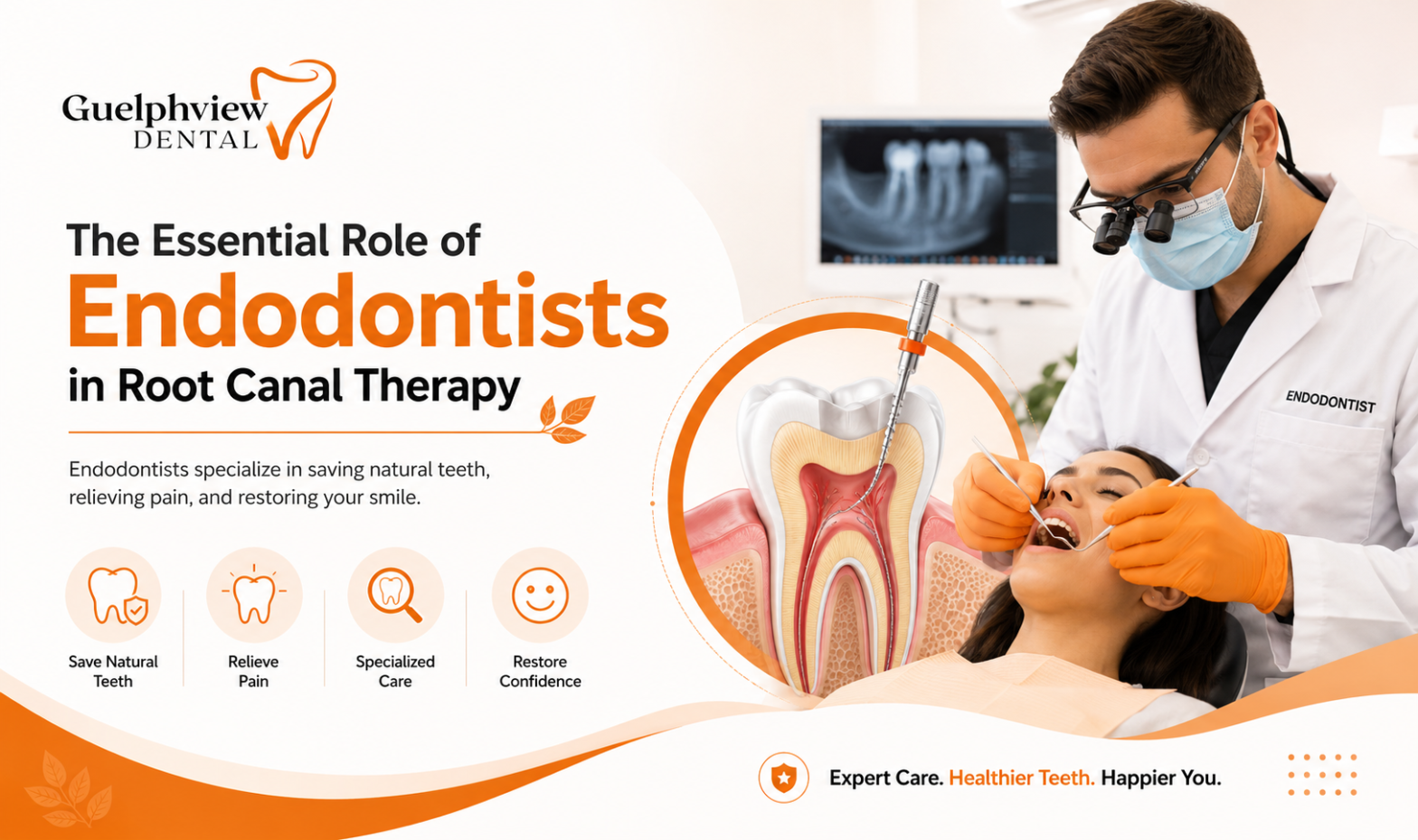
The Essential Role of Endodontists in Root Canal Therapy
When severe tooth pain, deep decay, or infection reaches the inner part of a tooth, many patients are referred to a root canal specialist for advanced care. While general dentists can perform many dental procedures, endodontists are trained specifically to diagnose and treat problems affecting the dental pulp and tooth roots.
Modern root canal treatment has changed significantly over the years. With advanced imaging, precision instruments, and improved anesthetic techniques, patients can now experience more comfortable and predictable outcomes. In many cases, painless root canal treatment is possible when performed early by an experienced specialist. To learn more about what root canal therapy involves, you can refer to the Canadian Dental Association, Canada’s national voice on dental health.
Understanding the role of endodontists can help patients feel more confident about saving a damaged tooth and protecting their long-term oral health.
What Is a Root Canal Specialist?
A root canal specialist, also known as an endodontist, is a dental professional who focuses on diagnosing tooth pain and performing procedures related to the inside of the tooth. After completing dental school, endodontists receive additional years of advanced training in treating infected or damaged dental pulp. At Guelphview Dental, our team of dental professionals is dedicated to providing this level of advanced, specialized care to every patient.
Their expertise includes:
- Treating deep tooth infections
- Performing complex root canal therapy
- Managing dental trauma
- Retreatment of failed root canals
- Saving severely damaged natural teeth
Because they perform these procedures regularly, endodontists are often equipped with advanced tools such as digital imaging systems, dental microscopes, ultrasonic instruments, and rotary endodontic technology.
Why Root Canal Therapy Is Sometimes Necessary
Inside every tooth is soft tissue called pulp. This pulp contains nerves, connective tissue, and blood vessels. When bacteria enter the pulp through deep decay, cracks, repeated dental work, or trauma, infection and inflammation can develop.
Common signs that may indicate the need for root canal therapy include:
- Persistent tooth pain
- Sensitivity to hot or cold
- Swollen gums near the affected tooth
- Pain while chewing
- Darkening of the tooth
- A small pimple-like bump on the gums
Without treatment, infection can spread deeper into the bone and surrounding tissues. In severe cases, untreated infection may lead to tooth loss or abscess formation. HealthLink BC, a trusted Canadian government health resource, notes that a dental abscess requires prompt professional attention to prevent the infection from spreading further. If you suspect an abscess or infection, our emergency dental care team is available to provide fast, effective relief.
A skilled root canal specialist focuses on removing infection while preserving the natural tooth structure whenever possible.
How Endodontists Improve Root Canal Treatment Outcomes
Many patients wonder why they may be referred to a specialist instead of receiving treatment from a general dentist. The answer often depends on the complexity of the case.
Advanced Training and Precision
Endodontists are trained to identify tiny root canals and hidden infections that may not be easily visible during routine dental exams. Their specialized experience helps improve treatment accuracy, especially in difficult cases. As part of our family dentistry approach at Guelphview Dental, we refer patients to our endodontic team whenever a case requires this higher level of precision.
This can be particularly important for:
- Molars with curved roots
- Previously treated teeth
- Cracked teeth
- Severe infections
- Dental trauma cases
Their advanced knowledge often increases the chances of long-term tooth preservation.
The Process of Root Canal Therapy
Understanding the procedure can reduce anxiety and help patients feel more comfortable about treatment.
1. Examination and Diagnosis
The process begins with a detailed evaluation. Digital X-rays and advanced imaging may be used to determine the extent of infection and assess the tooth roots.
The root canal specialist then develops a treatment plan based on the condition of the tooth.
2. Numbing the Area
Modern anesthetics help make painless root canal treatment possible for most patients. The affected tooth and surrounding tissues are carefully numbed before treatment begins.
Many patients compare the experience to receiving a routine dental filling.
3. Removing the Infection
A small opening is created in the tooth to access the infected pulp. Specialized instruments are then used to clean and disinfect the root canals thoroughly.
This step is essential for eliminating bacteria and preventing reinfection.
4. Sealing the Tooth
Once the canals are cleaned and shaped, they are filled with a biocompatible material to seal the inside of the tooth.
In many cases, a dental crown is later placed to strengthen and protect the treated tooth. Our dental crowns & bridges service ensures your restored tooth receives the durable protection it needs for long-term function.
Why Patients Prefer Specialists for Complex Cases
A major advantage of seeing an endodontist is their ability to handle difficult or advanced infections with precision.
Better Pain Management
Because endodontists focus heavily on treating tooth pain, they often use techniques designed to improve patient comfort throughout the procedure.
This has helped change the public perception of root canal treatment over recent years. Modern procedures are far more comfortable than many people expect.
Higher Focus on Tooth Preservation
Saving the natural tooth is often the primary goal. Preserving a natural tooth can help maintain:
- Proper chewing function
- Jawbone stability
- Natural appearance
- Bite alignment
Whenever possible, endodontists aim to avoid unnecessary tooth extraction. When extraction is unavoidable, our team can also discuss full mouth reconstruction options to restore your smile.
Common Myths About Root Canal Therapy
Despite advances in dentistry, many myths still surround root canal procedures.
Myth 1: Root Canal Therapy Is Extremely Painful
Modern dentistry has made painless root canal treatment achievable in most situations. The procedure is designed to relieve pain caused by infection, not create it.
Myth 2: Tooth Extraction Is Better
Saving a natural tooth is usually the preferred option whenever possible. Removing a tooth may lead to additional procedures such as implants or bridges.
Myth 3: Root Canals Cause Illness
Scientific evidence does not support the claim that properly performed root canal therapy causes disease elsewhere in the body. The Ontario Dental Association, a trusted provincial dental body in Canada, emphasizes the importance of evidence-based dentistry and patient education for informed oral health decisions.
Technology Used by Root Canal Specialists
Advancements in dental technology have significantly improved treatment precision and patient experience.
Digital Imaging
High-resolution digital imaging allows specialists to detect hidden canals and evaluate infections more accurately.
Dental Microscopes
Microscopes provide enhanced visibility during treatment, helping specialists locate tiny canals and remove infected tissue more effectively.
Rotary Instruments
Modern rotary tools improve cleaning efficiency while reducing treatment time in many cases.
These innovations contribute to safer and more predictable outcomes.
Recovery After Root Canal Treatment
Most patients recover quickly after treatment. Mild soreness may occur for a few days, especially if the infection was severe before treatment.
Patients are often advised to:
- Avoid chewing hard foods temporarily
- Maintain good oral hygiene
- Attend follow-up visits
- Get a permanent dental crown if recommended
With proper care, a treated tooth can often last for many years. Our oral cancer screening and preventive services are also available to help you maintain full oral health between visits.
When Should You See a Root Canal Specialist?
It is important to seek professional care if you experience:
- Persistent tooth pain
- Swelling near a tooth
- Sensitivity that does not go away
- Pain while biting
- A cracked or injured tooth
Early diagnosis may help prevent infection from worsening and increase the chances of saving the tooth. If you are in pain right now, our emergency dental service can provide same-day relief. You can also explore our full range of dental services to learn more about how we support your oral health from every angle.
Delaying treatment can sometimes lead to more complex procedures later.
Frequently Asked Questions
Q1. What does a root canal specialist do?
A root canal specialist diagnoses and treats infections inside the tooth. They focus on procedures involving dental pulp and tooth roots.
Q2. Is painless root canal treatment really possible?
Yes. Modern anesthetics and advanced techniques allow many patients to undergo root canal treatment comfortably with minimal discomfort.
Q3. How long does root canal therapy take?
The procedure may take one or two visits depending on the severity of the infection and the complexity of the tooth.
Q4. Can a treated tooth last permanently?
With proper care, regular dental visits, and good oral hygiene, a treated tooth can last for many years.
Q5. When should I see a root canal specialist instead of a general dentist?
Complex infections, retreatment cases, cracked teeth, or severe tooth pain may require evaluation by a root canal specialist. Visit our FAQs page for more answers to common dental questions.
About the Author
This article was created by a dental health content team focused on patient education, preventive care, and evidence-based dentistry. The content is developed using current clinical understanding and reviewed for accuracy, readability, and patient-centered guidance to help readers make informed oral health decisions.