
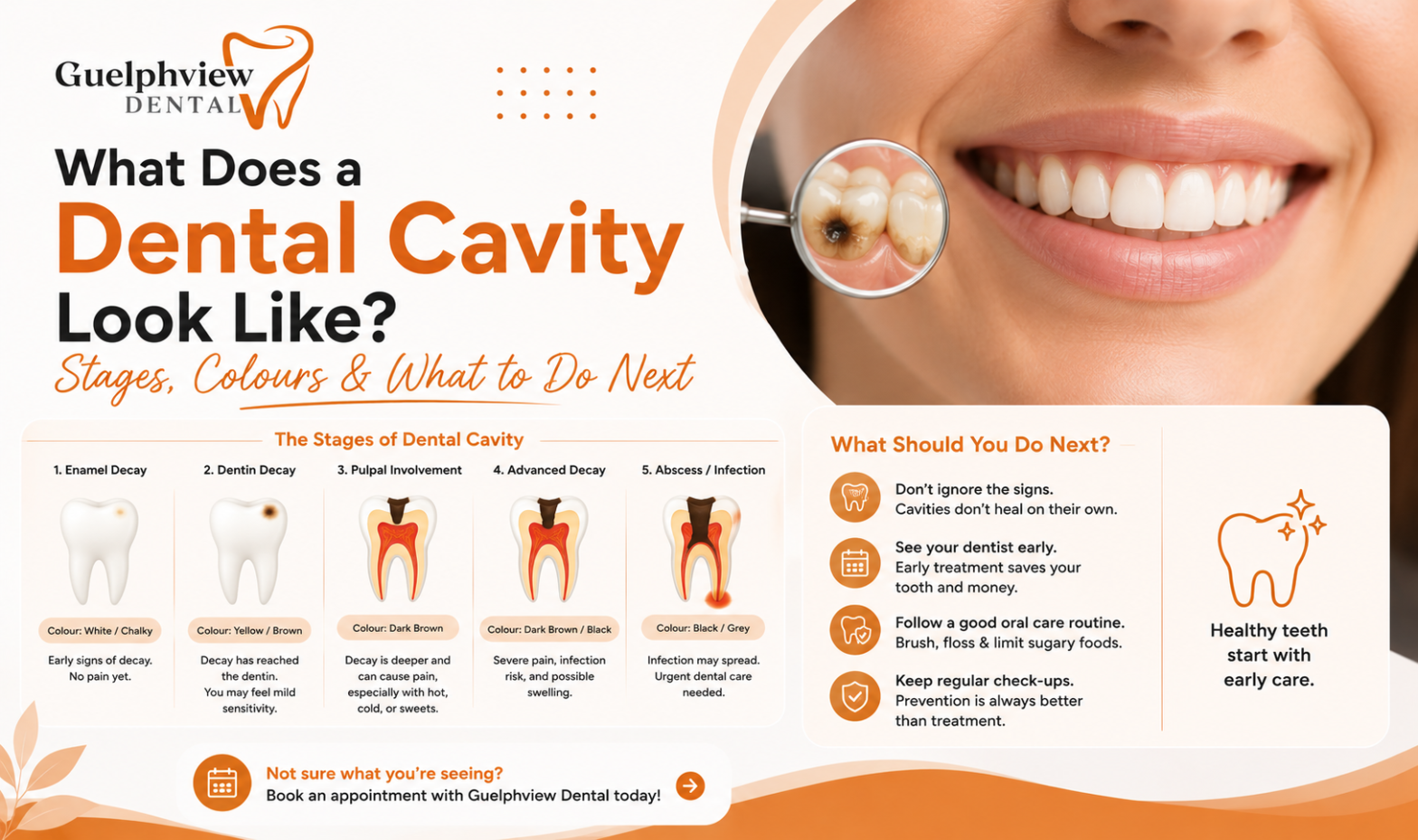
What Does a Dental Cavity Look Like? Stages, Colours & What to Do Next
Most people know cavities are common, but many are surprised to learn that tooth decay does not always start as a visible hole. In its earliest stages, a cavity may appear as a small white spot or slight discoloration that can easily go unnoticed.
Understanding what a cavity looks like at different stages can help you seek Dental Cavity Treatment before the damage becomes more serious. Early intervention often means simpler, more comfortable care and helps preserve your natural tooth structure.
In this guide, you’ll learn how cavities develop, the colours and signs to watch for, and the treatment options available at different stages of decay.
What Is a Dental Cavity?
A dental cavity is a permanently damaged area of a tooth caused by tooth decay. Cavities develop when bacteria in the mouth feed on sugars and starches, producing acids that gradually wear away the protective enamel layer.
Without timely professional cavity treatment, decay can progress deeper into the tooth, affecting the dentin and eventually the pulp, where nerves and blood vessels are located. Our team at Guelphview Dental uses digital X-rays to detect decay at even its earliest stages — before it becomes visible to the naked eye.
Cavities can occur in people of all ages and are one of the most common oral health conditions worldwide.
What Does a Dental Cavity Look Like?
The appearance of a cavity depends on how advanced the decay has become. A cavity may look different from one person to another, but there are several common visual signs.
1. White Spots
Early-stage decay often appears as chalky white spots on the tooth surface.
These spots indicate that minerals are being lost from the enamel. At this stage, the damage may still be reversible with fluoride treatments and improved oral hygiene.
2. Brown or Yellow Discoloration
As decay progresses, affected areas may turn yellow, light brown, or dark brown.
The discoloration occurs because the enamel is weakening and bacteria are penetrating deeper into the tooth structure.
3. Black Spots
A black spot can indicate advanced decay. While not every black mark is a cavity, dark discoloration should always be evaluated by a cavity dentist.
4. Visible Holes or Pits
One of the clearest signs of a cavity is a visible hole in the tooth. These openings can trap food particles and bacteria, making the decay worse over time.
5. Crumbling or Rough Tooth Surface
Advanced cavities may cause the tooth surface to feel rough, uneven, or fragile. In severe cases, parts of the tooth may chip away.
The Different Stages of Tooth Decay
Recognizing the stages of tooth decay can help determine the most appropriate dental cavity treatment.
Stage 1: Demineralization
This is the earliest phase of decay.
Signs:
- White spots on enamel
- No pain or discomfort
- Minor mineral loss
Treatment:
- Fluoride therapy
- Improved brushing and flossing habits
- Dietary modifications
Early intervention can often stop or reverse the process. Our dental cleaning and prevention service includes fluoride treatments and personalized guidance to protect your enamel at this critical stage.
Stage 2: Enamel Decay
The enamel begins to break down permanently.
Signs:
- White, brown, or yellow spots
- Mild sensitivity
- Small areas of surface damage
Treatment:
- Monitoring by a dentist
- Early restorative care if needed
Stage 3: Dentin Decay
Once decay reaches the dentin, it spreads more rapidly.
Signs:
- Increased sensitivity
- Visible cavity formation
- Pain when eating sweets or drinking hot and cold beverages
Treatment:
- Dental fillings
- Removal of decayed tooth material
At this stage, delaying treatment often results in more extensive procedures.
Stage 4: Pulp Infection
The cavity reaches the tooth’s inner pulp.
Signs:
- Persistent toothache
- Swelling
- Severe sensitivity
- Possible abscess formation
Treatment:
When infection reaches the pulp, root canal therapy removes infected tissue while preserving the tooth. A restoration with a dental crown is often recommended to protect and strengthen the treated tooth.
Stage 5: Advanced Infection
This is the most serious stage.
Signs:
- Significant pain
- Facial swelling
- Infection spreading beyond the tooth
- Tooth damage beyond repair
Treatment: In cases where a tooth cannot be saved, tooth extraction may be the most appropriate option, followed by suitable replacement solutions such as implants or bridges.
Many people assume cavities are always black, but tooth decay can appear in several colours.
- White – Early enamel demineralization.
- Yellow – Decay beginning to affect deeper tooth layers.
- Brown – Active or progressing decay.
- Dark Brown or Black – Advanced decay or long-standing damage.
- Gray – May indicate internal tooth damage or dying tooth tissue.
Because cavity colour varies, any unusual discoloration should be examined by a dental professional.
The Ontario Dental Association provides helpful patient resources on cavities and tooth decay that are a great complement to professional care.
What Colour Is a Cavity?
Symptoms That Often Accompany Cavities
Visual signs are important, but cavities frequently produce symptoms as they worsen.
Common warning signs include:
- Tooth sensitivity
- Pain when biting
- Toothache
- Bad breath
- Visible holes in teeth
- Food getting stuck in certain areas
- Swollen gums near the affected tooth
If you notice any of these symptoms, scheduling an emergency dental appointment can help prevent further complications and get you back to comfort faster.
Dental Cavity Treatment Options
The best treatment depends on how far the decay has progressed.
Fluoride Treatments
When decay is caught very early, fluoride may help strengthen enamel and halt progression.
Dental Fillings
Dental fillings are among the most common solutions for cavities.
The dentist removes the decayed portion of the tooth and restores it with a durable filling material.
Benefits include:
- Preserving natural tooth structure
- Restoring function
- Preventing further decay
Dental Crowns
If a cavity has weakened a large portion of the tooth, a crown may be recommended to restore strength and appearance.
Root Canal Therapy
When infection reaches the pulp, root canal treatment removes infected tissue while preserving the tooth.
Tooth Extraction
In cases where a tooth cannot be saved, extraction may be the most appropriate option.
A qualified cavity dentist can recommend suitable replacement solutions if removal becomes necessary. We also offer family dentistry services to ensure every member of your household receives the timely care they need.
When Should You See a Dentist?
You should schedule a dental visit if you notice:
- White, brown, or black spots on teeth
- Tooth sensitivity
- Pain while chewing
- Persistent toothache
- Visible holes or pits
- Swelling around a tooth
Many cavities cause little or no discomfort during their early stages. Routine examinations often identify decay before symptoms appear, making treatment easier and less invasive. The Canadian Dental Association recommends regular checkups as a key strategy for preventing cavities from advancing.
How to Reduce Your Risk of Cavities
Good daily habits significantly lower the risk of tooth decay.
Brush Thoroughly
Brush twice daily using fluoride toothpaste.
Floss Every Day
Flossing removes plaque and food particles from between teeth.
Limit Sugary Foods and Drinks
Reducing sugar intake decreases acid production that damages enamel.
Stay Hydrated
Water helps wash away food debris and supports healthy saliva production.
Schedule Regular Dental Checkups
Professional examinations and cleanings help identify problems before they become severe. Our children’s dentistry team also helps younger patients build strong oral hygiene habits early, giving them the best foundation for a lifetime of healthy teeth.
For more on oral health in Canada, Health Canada’s oral health resources offer evidence-based guidance for patients of all ages.
Frequently Asked Questions
Q1. What does an early cavity look like?
An early cavity often appears as a chalky white spot on the tooth surface. This indicates enamel demineralization before a visible hole develops.
Q2. Are black spots on teeth always cavities?
No. Some black spots may be stains or discoloration. However, dark spots should always be evaluated by a cavity dentist to rule out decay.
Q3. Can a cavity heal on its own?
Once a cavity forms a hole in the tooth, it cannot heal naturally. Early enamel damage may be reversible with fluoride and professional care.
Q4. Do all cavities cause pain?
No. Many cavities remain painless during their early stages. This is why routine dental examinations are important for early detection.
Q5. What is the most common dental cavity treatment?
Dental fillings are the most common treatment for cavities that have progressed beyond the earliest stage of decay.
About the Author
This article was reviewed and prepared by a dental content specialist working alongside experienced oral healthcare professionals. The information is based on current clinical recommendations, preventive dentistry principles, and restorative treatment practices. The goal is to provide accurate, evidence-based guidance that helps patients make informed decisions about their oral health.