
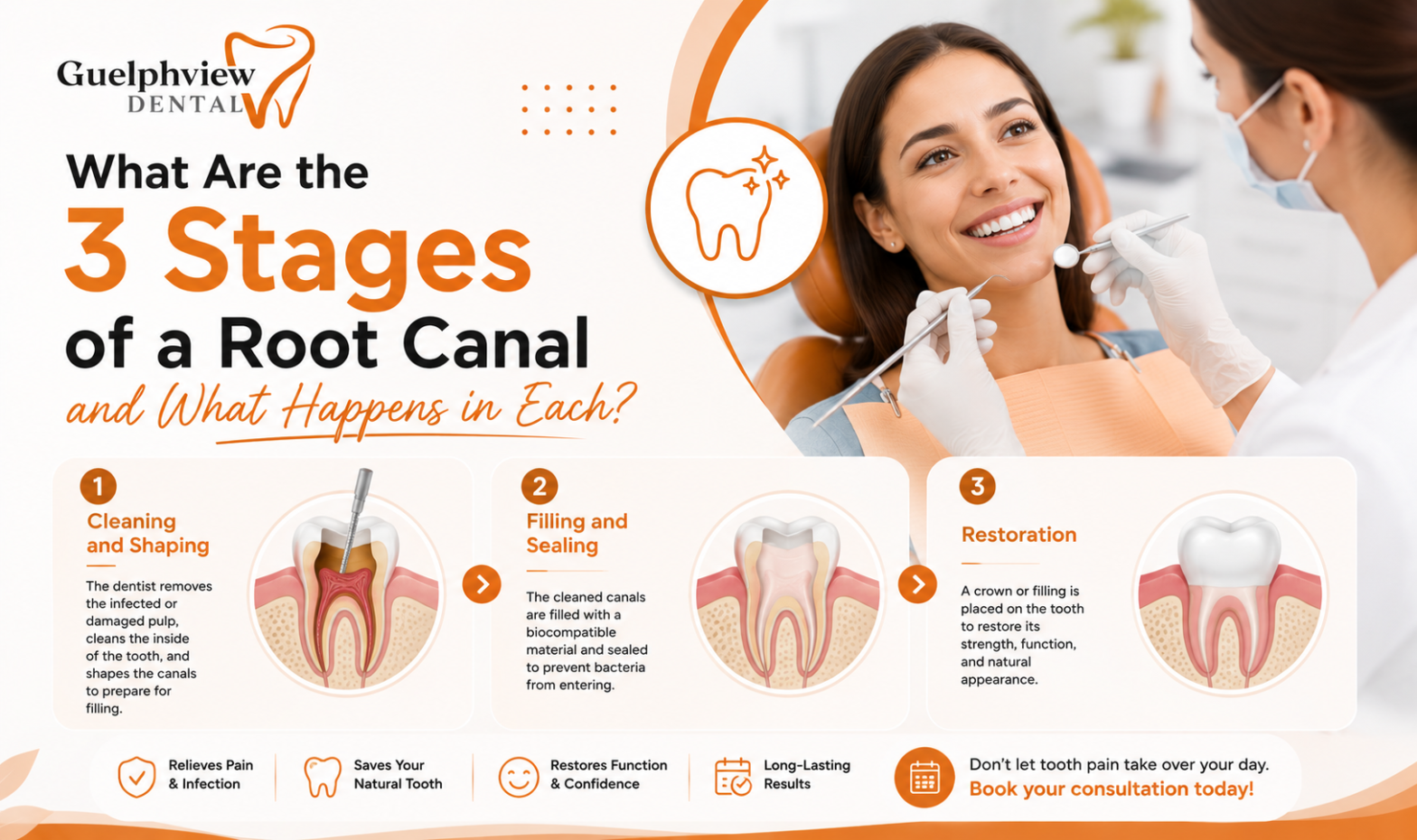
What Are the 3 Stages of a Root Canal and What Happens in Each?
Tooth pain has a way of disrupting everyday life. Whether it’s a sharp sensation when drinking coffee or persistent throbbing that keeps you awake at night, discomfort often signals a deeper issue within the tooth. When the inner pulp becomes infected or inflamed, root canal treatment is often the most effective solution for preserving the natural tooth and preventing further complications. To learn more about comprehensive dental services available in Georgetown, visit Guelphview Dental.
Although root canals have a reputation for being intimidating, modern dentistry has transformed the procedure into a predictable and comfortable treatment. Understanding the process can help reduce anxiety and give patients confidence in their treatment decisions.
In this guide, we’ll explore the three stages of root canal treatment, explain what happens during each phase, discuss recovery expectations, and answer some of the most common patient questions.
Understanding Why a Root Canal Is Needed
Every tooth contains a soft inner tissue called pulp. This pulp houses nerves, blood vessels, and connective tissue that help support tooth development. Once a tooth is fully mature, it can continue functioning even if the pulp is removed. The Canadian Dental Association provides detailed information on how root canal therapy preserves natural teeth when the pulp becomes compromised.
Problems arise when bacteria reach the pulp through:
- Deep tooth decay
- Cracked or fractured teeth
- Repeated dental procedures
- Trauma or injury
- Untreated cavities
As infection develops, patients may notice:
- Persistent tooth pain
- Sensitivity to hot or cold foods
- Swollen gums
- Pain when chewing
- Tooth discoloration
- Facial swelling in severe cases
Without timely tooth infection treatment, the infection can spread beyond the tooth and affect surrounding tissues.
The 3 Main Stages of Root Canal Treatment
While treatment plans vary depending on the complexity of the case, most procedures follow three essential stages.
Stage 1: Examination, Diagnosis, and Access Preparation
The first stage focuses on identifying the source of the problem and preparing the tooth for treatment.
Comprehensive Assessment
Before beginning treatment, the dentist performs a detailed examination of the affected tooth. Digital X-rays help reveal the extent of infection, the condition of the roots, and whether surrounding bone has been affected.
This evaluation is a critical step in determining whether root canal therapy is the best option for saving the tooth.
Patient Comfort Comes First
One of the biggest misconceptions about root canals is that they are painful. In reality, modern local anesthetics effectively numb the treatment area, making the procedure comparable to receiving a dental filling.
Patients are often surprised by how comfortable the experience feels.
Isolation and Access
A protective dental dam is placed around the tooth to keep the area clean and dry. The dentist then creates a small opening in the crown of the tooth to access the infected pulp chamber.
Once access is established, treatment can move to the infection removal phase.
What Patients Often Notice During Stage One
Many patients report immediate relief from pressure once the infected area is accessed. Although some tenderness may exist before treatment, the goal is to eliminate the source of discomfort rather than simply mask symptoms.
Stage 2: Cleaning and Disinfecting the Root Canals
The second stage is often considered the most important part of the procedure because it focuses on removing bacteria and infected tissue.
Removing Infected Pulp
Using specialized instruments, the dentist carefully removes damaged pulp from inside the tooth and root canals.
This process is the foundation of successful endodontic treatment because it eliminates the infected tissue responsible for pain and inflammation. Our family dentistry team at Guelphview Dental ensures every patient is fully informed and comfortable throughout each stage of care.
Shaping the Canals
After the pulp is removed, each canal is shaped and widened. This allows cleaning solutions to reach areas that could otherwise harbor bacteria.
Root canals vary significantly from person to person. Some teeth contain a single canal, while others may have multiple canals with complex anatomy.
Deep Cleaning and Irrigation
The canals are thoroughly rinsed using disinfecting solutions designed to remove debris and destroy harmful bacteria.
This stage plays a major role in successful tooth infection treatment because even small amounts of remaining bacteria can affect long-term outcomes. For urgent cases involving active infections, our emergency dental team provides same-day appointments to begin care as quickly as possible.
Medication When Necessary
In cases involving extensive infection or swelling, antibacterial medication may be placed inside the canals before the tooth is temporarily sealed.
This additional step helps create an environment that supports healing between appointments.
Why Thorough Cleaning Matters
Clinical research consistently shows that successful outcomes depend heavily on complete removal of infection. Proper cleaning helps reduce the risk of reinfection and promotes healing of surrounding tissues. The Ontario Dental Association recognizes endodontic treatment as a proven, evidence-based procedure for preserving natural teeth.
Stage 3: Filling, Sealing, and Restoring the Tooth
Once the canals are clean and free of infection, the final stage focuses on protecting the tooth for long-term function.
Filling the Canals
The cleaned canals are filled with a biocompatible material called gutta-percha. This material seals the canals and prevents bacteria from re-entering the tooth.
A secure seal is essential for long-term treatment success.
Restoring the Tooth
After the canals are sealed, the access opening must be restored.
Depending on the amount of remaining tooth structure, the dentist may recommend:
- A dental filling
- Dental crowns or bridges — especially for molars that experience heavy chewing pressure
- An onlay
Molars often require crowns because they experience substantial chewing pressure.
Final Bite Check
Before treatment is complete, the dentist ensures the restoration fits properly and that the bite remains balanced and comfortable.
With proper restoration, a treated tooth can continue functioning normally for many years.
What Happens If You Delay Treatment?
Many patients wonder if they can postpone treatment once symptoms begin. Unfortunately, dental infections rarely improve without professional care.
Delaying root canal treatment can increase the risk of:
- Severe pain
- Dental abscesses
- Bone loss around the tooth
- Spread of infection
- Tooth extraction — which may become necessary if the tooth cannot be saved
Patients often discover that early treatment is simpler, less invasive, and more predictable than waiting until symptoms become severe.
When faced with an infected tooth, patients frequently ask whether saving the tooth or removing it is the better option.
Benefits of Root Canal Treatment
- Preserves the natural tooth
- Maintains normal chewing ability
- Prevents shifting of nearby teeth
- Supports long-term oral health
- Often avoids more extensive restorative procedures
When Extraction May Be Necessary
Extraction may be recommended if the tooth is severely damaged and cannot be restored. However, replacing a missing tooth often requires additional procedures such as dental implants, bridges, or dentures. For cases requiring comprehensive rebuilding of multiple teeth, full mouth reconstruction offers a coordinated treatment plan to restore function and aesthetics.
Whenever possible, preserving the natural tooth is generally the preferred approach.
Root Canal Treatment vs Tooth Extraction
Recovery After Root Canal Therapy
Recovery is typically straightforward.
Most patients return to normal activities within 24 hours.
Temporary Symptoms
Some mild symptoms are normal, including:
- Tenderness when biting
- Mild soreness around the treated tooth
- Temporary sensitivity
These symptoms usually improve within a few days.
Recovery Tips
To support healing:
- Follow all post-treatment instructions
- Take medications as prescribed
- Avoid chewing hard foods on the treated side initially
- Maintain regular brushing and flossing — routine dental cleaning and prevention appointments are essential for long-term success
- Attend recommended follow-up appointments
Prompt placement of a crown, when advised, can also help protect the tooth from future damage.
Why Georgetown Patients Seek Endodontic Treatment
Patients throughout Georgetown commonly require treatment due to untreated cavities, cracked teeth, sports injuries, and advanced tooth infections.
At Guelphview Dental, located at 232A Guelph St, Georgetown, ON, comprehensive examinations and modern diagnostic technology help identify the cause of dental discomfort and determine whether root canal treatment is the most appropriate treatment option. Book an appointment today to speak with our team about your dental concerns.
Early diagnosis often allows patients to preserve their natural teeth and avoid more complex dental problems in the future.
Frequently Asked Questions
Q1. Is root canal treatment painful?
Modern techniques and local anesthesia make the procedure highly comfortable. Most patients compare it to receiving a routine filling.
Q2. How long does root canal treatment take?
Many treatments take between 60 and 90 minutes per appointment. Some cases can be completed in one visit, while others require multiple appointments.
Q3. Can I drive home after a root canal?
Yes. Most patients can drive home safely after treatment unless sedation has been used.
Q4. How successful is root canal therapy?
When properly performed and followed by appropriate restoration, root canal treatment has a high long-term success rate and can preserve natural teeth for many years.
Q5. What are the signs that I may need tooth infection treatment?
Common signs include persistent tooth pain, prolonged sensitivity, swelling, gum tenderness, pain when chewing, and recurring dental abscesses.
About the Author
This article was developed using evidence-based dental resources and current endodontic treatment standards. Content is reviewed for accuracy and designed to help patients understand common dental procedures, treatment options, and preventive care strategies.
Information is regularly evaluated to reflect current clinical practices and patient education guidelines. While this article provides general information, individual treatment recommendations should always be based on a comprehensive examination performed by a qualified dental professional.
Final Thoughts
Understanding the three stages of root canal treatment can make the procedure feel much less overwhelming. The process begins with diagnosis and preparation, continues with thorough cleaning and disinfection, and concludes with sealing and restoring the tooth.
Modern root canal therapy is designed to eliminate infection, relieve discomfort, and preserve natural teeth whenever possible. For many patients, treatment provides lasting relief and helps restore confidence in their oral health.
If you’re experiencing persistent tooth pain, sensitivity, or swelling, seeking professional evaluation early can help prevent complications and improve treatment outcomes.