
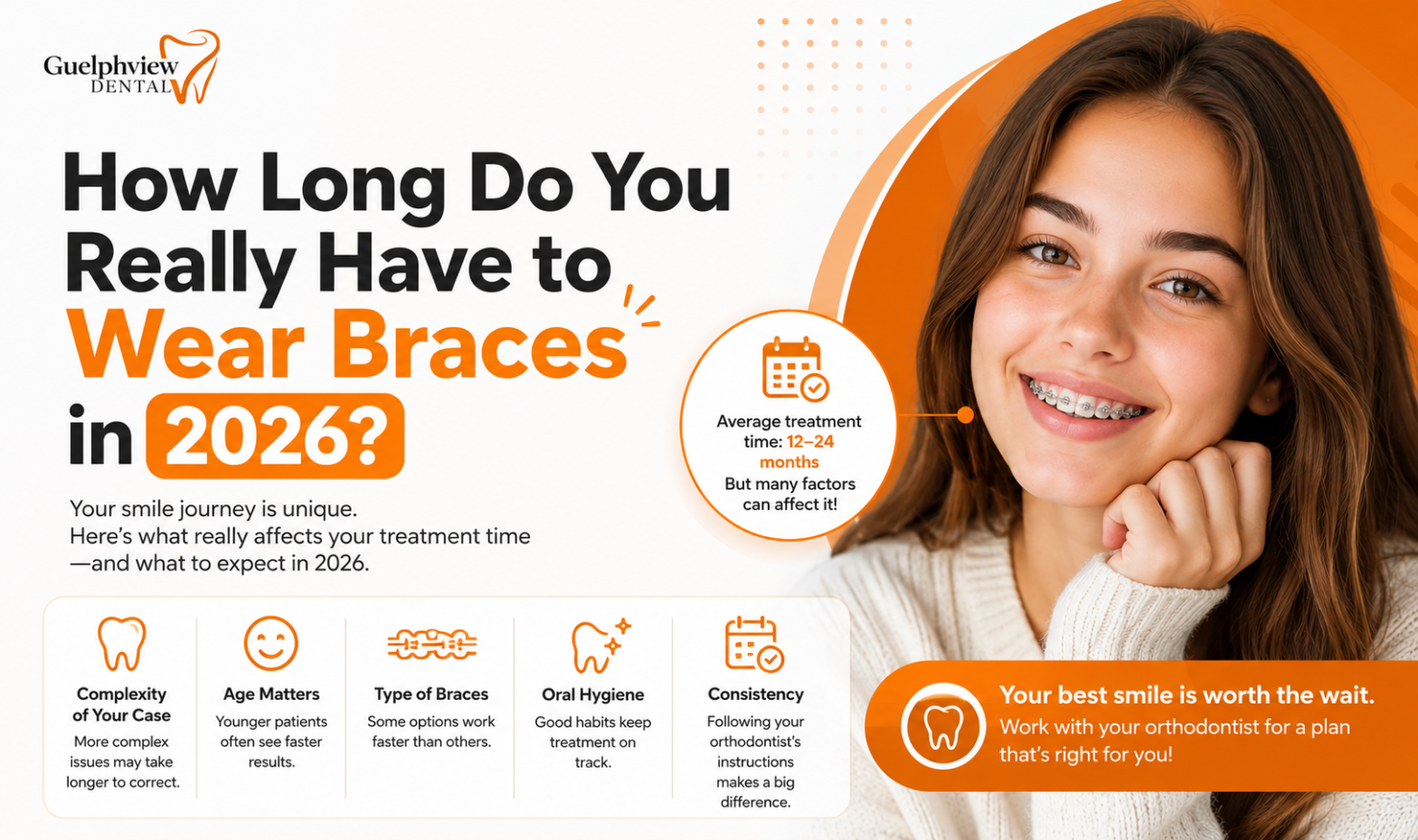
How Long Do You Really Have to Wear Braces in 2026?
When people consider a teeth straightening treatment, one of the first questions that comes to mind is simple: How long will this take? In 2026, the answer is more flexible than ever. Thanks to modern advancements in braces and orthodontics, treatment times are no longer one-size-fits-all. Some patients finish in months, while others may need a couple of years—depending on several key factors.
This guide breaks down what truly affects your timeline, what’s changed in recent years, and how you can achieve faster, more predictable results with the right orthodontic care services. For a full overview of the treatments available at our clinic, explore our orthodontic care services page.
The Average Time for Teeth Straightening Treatment
- 6 to 12 months – Mild alignment issues
- 12 to 18 months – Moderate cases
- 18 to 30 months – Complex orthodontic corrections
What Determines How Long You'll Wear Braces?
Your treatment duration depends on multiple clinical and lifestyle factors. A smile alignment expert will evaluate these during your initial consultation.
1. Severity of Misalignment
The more complex your dental issue, the longer it takes to correct.
- Crowding or spacing → Moderate timeline
- Bite issues (overbite, underbite) → Longer timeline
- Minor cosmetic alignment → Shorter timeline
2. Type of Braces or System Used
Different braces and orthodontics options come with different speeds:
- Traditional metal braces: Reliable but may take longer
- Ceramic braces: Slightly faster with aesthetic appeal
- Clear aligners: Often quicker for mild to moderate cases
- Lingual braces: Customized but sometimes slower due to complexity
Clear aligner technology in 2026 has improved significantly, allowing more precise tooth movement with fewer adjustments.
3. Age and Bone Response
Younger patients often experience faster results because their bones are still developing. Our children’s dentistry team offers early orthodontic assessments to identify alignment issues before they become complex. Adults can still achieve excellent results, but treatment may take slightly longer due to denser bone structure.
4. Patient Compliance
This is one of the most overlooked factors. Even the most advanced orthodontic care services cannot speed up treatment if instructions aren’t followed.
Examples of good compliance:
- Wearing aligners 20–22 hours daily
- Attending scheduled appointments
- Avoiding foods that damage braces
- Maintaining proper oral hygiene
Skipping these can extend treatment time significantly.
5. Technology Used by the Clinic
Modern clinics now use:
- 3D digital scans and digital X-rays
- AI-driven treatment planning
- Predictive simulation tools
These innovations allow a smile alignment expert to map out precise tooth movements, reducing unnecessary delays and improving outcomes.
Can You Speed Up Your Braces Treatment?
Yes—but only safely and under professional supervision. Here’s how patients in 2026 are optimizing their treatment timelines:
Follow Instructions Strictly
Wearing aligners inconsistently or breaking brackets delays progress.
Maintain Excellent Oral Hygiene
Inflammation or gum issues can slow down tooth movement. Routine dental cleaning and prevention appointments throughout your orthodontic treatment help keep your gums healthy and your treatment on track.
Choose Advanced Systems
Modern braces and orthodontics solutions are designed for efficiency.
Attend Regular Adjustments
Missing appointments can set you back weeks or even months.
Ask About Acceleration Techniques
Some clinics offer vibration devices or minor procedures that can enhance tooth movement speed.
What's Changed in 2026 Compared to Earlier Years?
Orthodontic treatment today is faster, more comfortable, and highly personalized.
AI-Powered Planning
Treatment is mapped digitally before it begins, reducing trial-and-error adjustments.
Fewer In-Person Visits
Remote monitoring allows orthodontists to track progress virtually.
More Comfortable Materials
Modern wires and aligners apply gentler, more consistent force.
Shorter Adjustment Cycles
Improved technology means quicker progress between visits. The Ontario Association of Orthodontists supports the adoption of modern treatment protocols that improve patient outcomes across Ontario.
Life After Braces: Why Retainers Matter
Completing your teeth straightening treatment is only part of the journey. After braces are removed, retainers are essential to maintain your results.
Without retainers:
- Teeth can gradually shift back
- Months or years of treatment may be undone
Retention plans vary but often include:
- Full-time wear initially
- Night-time wear long-term
Consistency here protects your investment and ensures lasting results. Many patients also choose to enhance their post-treatment smile with professional teeth whitening once their braces are removed for a complete transformation.
Choosing the Right Orthodontic Care Services
Not all providers offer the same level of care. When selecting orthodontic care services, consider:
- Experience in handling different case complexities
- Use of modern diagnostic tools
- Transparent treatment timelines
- Personalized treatment planning
A well-qualified smile alignment expert will explain your expected timeline clearly and provide realistic expectations based on your unique case. The Canadian Dental Association recommends choosing an accredited provider who uses evidence-based techniques and offers comprehensive patient education throughout the treatment process.
Common Myths About Braces Duration
“Braces always take 2 years”
This is outdated. Many modern cases finish in under 12–18 months.
“Clear aligners are always faster”
They can be—but only with consistent wear and proper case selection.
“Adults take much longer than teens”
Adults may take slightly longer, but the difference is often minimal with modern techniques.
Frequently Asked Questions
Q1. What is the fastest teeth straightening treatment available in 2026?
Clear aligners are often the fastest for mild to moderate cases, sometimes completing treatment in as little as 6 months with proper compliance.
Q2. Can braces work in less than a year?
Yes, minor alignment issues can often be corrected within 6–12 months using modern orthodontic care services.
Q3. Do braces hurt throughout the treatment?
Discomfort is usually mild and temporary, especially after adjustments. Modern systems are designed to minimize pain.
Q4. What happens if I don't wear my aligners as instructed?
Inconsistent use can delay your treatment and affect final results, potentially extending your timeline significantly.
Q5. Is it possible for teeth to shift back after braces?
Yes, without proper retainer use, teeth can move back over time. Retainers are essential for maintaining results. If dental damage occurs during treatment, our emergency dental team is here to help promptly.
About the Author
This content is created by a dental content specialist with a strong focus on patient education and modern orthodontic advancements. The insights are based on current clinical practices, evolving treatment technologies, and real-world patient outcomes. The goal is to provide clear, accurate, and trustworthy information that helps readers make informed decisions about their oral health and treatment options.