
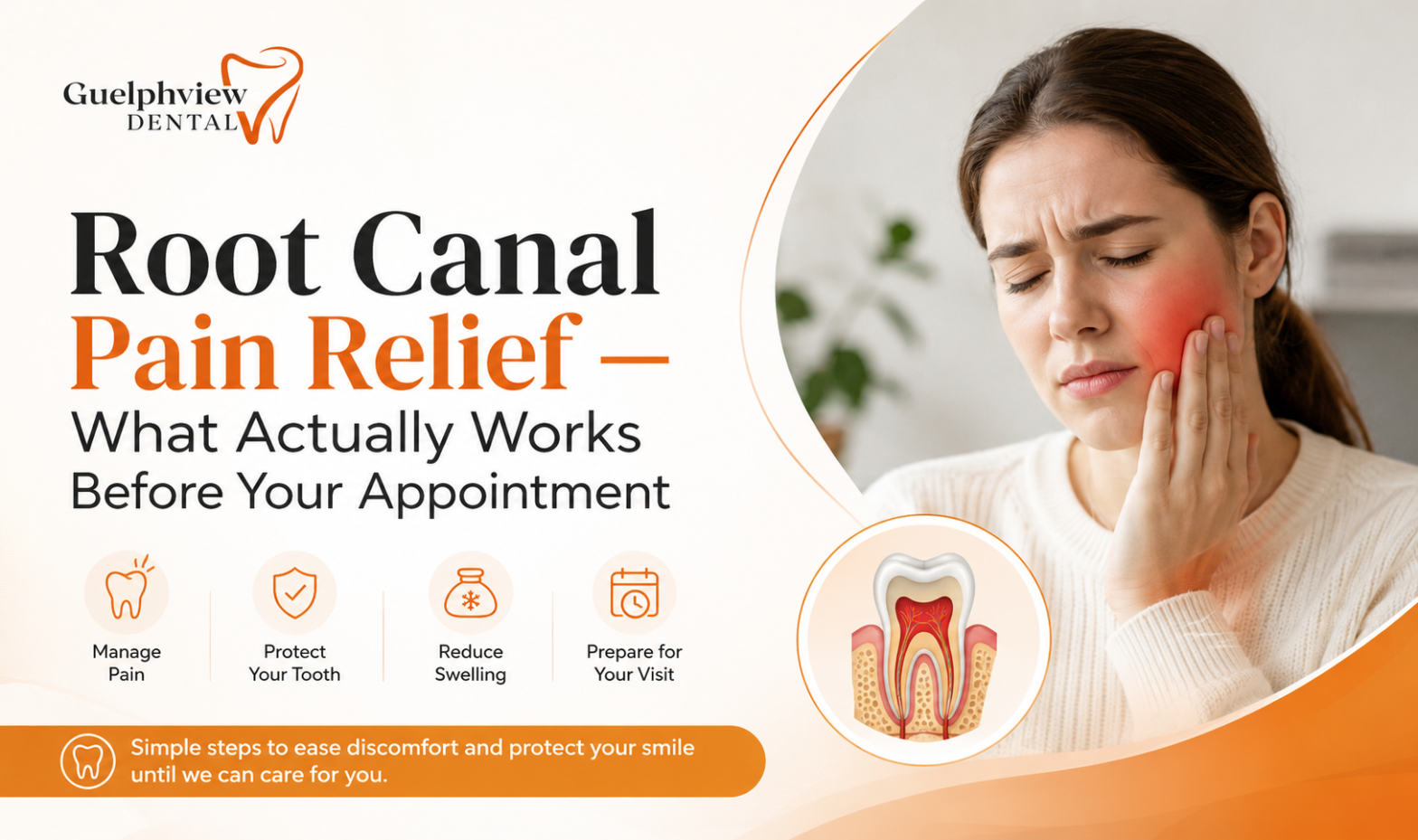
Root Canal Pain Relief — What Actually Works Before Your Appointment
Why Root Canal Pain Happens
Inside every tooth is a soft tissue called the pulp. This area contains nerves and blood vessels that help the tooth develop. When bacteria enter the pulp because of deep decay, cracks, trauma, or untreated cavities, the tissue can become infected.
Common symptoms include:
- Throbbing or constant tooth pain
- Sensitivity to hot or cold temperatures
- Pain when chewing or biting
- Swollen gums around the tooth
- A bad taste or odor in the mouth
- Facial swelling in severe cases
Pain may start gradually or appear suddenly. Some infections become severe enough to require a routine emergency dental appointment to prevent the infection from spreading. According to the Canadian Dental Association, an abscessed tooth can cause serious oral health problems if left untreated.
What Actually Works for Root Canal Pain Relief
Temporary relief methods can help reduce discomfort before your appointment, but they do not cure the infection itself. The underlying issue usually requires professional root canal therapy.
1. Over-the-Counter Pain Medication
Nonprescription anti-inflammatory medications are often the most effective short-term solution.
Options commonly recommended by dental professionals include:
- Ibuprofen
- Acetaminophen
- Naproxen
These medications may reduce inflammation and temporarily control pain. Always follow dosage instructions and avoid taking more than recommended.
If you have medical conditions, are pregnant, or take prescription medications, speak with your healthcare provider before using pain relievers.
2. Cold Compress for Swelling
If the area around the tooth or jaw feels swollen, a cold compress can help reduce inflammation.
Apply an ice pack wrapped in a cloth to the outside of the cheek for about 15 minutes at a time. Repeat throughout the day as needed.
Avoid placing ice directly on the tooth, as extreme temperatures may increase sensitivity.
3. Warm Salt Water Rinse
A salt water rinse may help clean the area and soothe irritated gums.
Mix:
- Half a teaspoon of salt
- One cup of warm water
Gently rinse your mouth for 30 seconds before spitting it out.
This method does not eliminate infection, but it may temporarily ease irritation and improve comfort.
4. Keep the Area Clean
Good oral hygiene becomes even more important when a tooth is infected. Our dental cleaning and prevention services can also help support your ongoing oral health between appointments.
Continue to:
- Brush gently twice daily
- Floss carefully around the affected tooth
- Avoid aggressive brushing
Skipping oral care can allow bacteria to build up and worsen symptoms.
5. Avoid Trigger Foods and Drinks
Certain foods can intensify root canal pain.
Try to avoid:
- Very hot beverages
- Ice-cold drinks
- Sugary foods
- Hard or crunchy snacks
- Sticky candies
Soft foods and room-temperature meals are often easier to tolerate before your appointment.
6. Sleep With Your Head Elevated
Lying flat may increase blood flow and pressure around the infected tooth, which can worsen throbbing pain.
Sleeping with your head elevated using an extra pillow may help reduce discomfort at night.
What Does Not Work
Many online home remedies promise instant relief, but some can irritate the tooth further or delay proper care.
Avoid:
- Placing aspirin directly on the gums
- Using extremely hot compresses
- Applying alcohol to the tooth
- Ignoring severe swelling
- Delaying treatment for long periods
Temporary relief methods should never replace professional dental care.
When You May Need a Routine Emergency Root Canal
Some symptoms suggest the infection is becoming more serious. Our emergency dental team is ready to assist when you need urgent care.
Contact a dental office immediately if you experience:
- Severe swelling in the gums or face
- Fever with tooth pain
- Difficulty swallowing
- Pus around the tooth
- Sudden intense throbbing
- Pain that keeps you awake at night
A routine emergency root canal may be recommended to stop the infection and preserve the tooth before complications develop.
What Happens During Root Canal Treatment
Many people feel anxious about root canal treatment because of outdated information. In reality, modern dental techniques and anesthesia make the procedure far more comfortable than most patients expect.
Our digital dental X-rays allow us to accurately diagnose the extent of the infection before treatment begins, ensuring a precise and effective procedure.
During treatment, the dentist or endodontist:
- Numbs the area completely
- Removes infected pulp tissue
- Cleans and disinfects the root canals
- Fills and seals the tooth
- Places a restoration or dental crown or bridge if needed
The goal is to eliminate infection, protect the natural tooth, and relieve pain.
Most patients report feeling significant relief after the infected tissue is removed.
Why Seeing a Root Canal Specialist Matters
Some cases are more complex than others. Teeth with curved canals, repeated infections, or severe damage may require advanced care from a root canal specialist. Our family dentistry services ensure that every member of your household receives coordinated, comprehensive dental care.
An endodontist is a dental professional with additional training focused on diagnosing tooth pain and performing root canal procedures.
Benefits of seeing an endodontist may include:
- Advanced diagnostic technology
- Specialized experience with difficult cases
- Improved precision during treatment
- Greater focus on preserving natural teeth
For patients dealing with persistent pain or complicated infections, specialized care can make the process smoother and more predictable.
Can Root Canal Pain Go Away on Its Own?
Sometimes the pain may temporarily decrease, but this does not mean the infection is gone.
In fact, reduced pain can occasionally indicate that the nerve inside the tooth has died. Without treatment, bacteria may continue spreading into surrounding tissues and bone.
Ignoring symptoms may eventually lead to:
- Dental abscesses requiring tooth extraction
- Tooth loss
- Bone damage
- Increased infection risk
- More complex full mouth reconstruction procedures later
Early treatment is usually simpler, faster, and more comfortable than waiting until symptoms become severe.
Recovery After Root Canal Treatment
Most patients recover quickly after root canal treatment.
Mild soreness for a few days is normal, especially when chewing. If you have lost a tooth due to untreated infection, our dental implants may be a suitable long-term solution to restore your smile. Your dental provider may recommend:
- Over-the-counter pain medication
- Soft foods for several days
- Avoiding chewing on the treated tooth temporarily
- Returning for a permanent crown if needed
Maintaining regular dental visits and good oral hygiene can help protect the treated tooth for many years.
How to Prevent Future Root Canal Problems
While not every dental issue is preventable, healthy habits can reduce your risk of serious infections. Regular oral cancer screenings are also an important part of maintaining your overall oral health. The Government of Canada also recommends maintaining a consistent oral hygiene routine to protect your long-term dental health.
Helpful prevention tips include:
- Brushing twice daily with fluoride toothpaste
- Flossing every day
- Scheduling regular dental checkups
- Treating cavities early
- Wearing a mouthguard during sports
- Avoiding chewing hard objects like ice
Addressing dental problems early often prevents the need for more extensive procedures later.
Frequently Asked Questions
Q1. How long can I wait before getting root canal treatment?
It is best not to delay treatment for long. An untreated tooth infection may worsen over time and lead to swelling, severe pain, or tooth loss.
Q2. Is root canal treatment painful?
Modern root canal treatment is designed to relieve pain, not cause it. Local anesthesia helps keep the procedure comfortable for most patients.
Q3. What should I eat before my appointment?
Soft foods such as yogurt, soup, mashed potatoes, eggs, and smoothies are often easier to tolerate when experiencing tooth pain.
Q4. Can antibiotics cure a root canal infection?
Antibiotics may temporarily reduce infection symptoms, but they usually cannot fully remove infection inside the tooth. Root canal treatment is often necessary.
Q5. Should I see a dentist or an endodontist?
Many general dentists perform root canal treatment, but complex cases may benefit from care provided by an endodontist with advanced training.
About the Author
This article was reviewed and prepared by a dental content professional with experience researching restorative dentistry, preventive care, and patient education topics. The content is developed using current dental guidance, clinical best practices, and patient-focused information designed to support informed oral health decisions.
Final Thoughts
Root canal pain can feel overwhelming, but effective relief options are available while waiting for treatment. Anti-inflammatory medication, cold compresses, salt water rinses, and careful oral hygiene may temporarily ease discomfort before your appointment. If you are eligible for the Canadian Dental Care Plan, you may be able to access coverage toward your root canal treatment costs.
However, lasting relief usually requires professional root canal treatment to remove the infection and protect the tooth.
If your symptoms worsen or swelling develops, seeking prompt care from a dentist, root canal specialist, or endodontist is important. Early treatment can stop the infection, preserve your natural tooth, and help you return to daily life comfortably.