
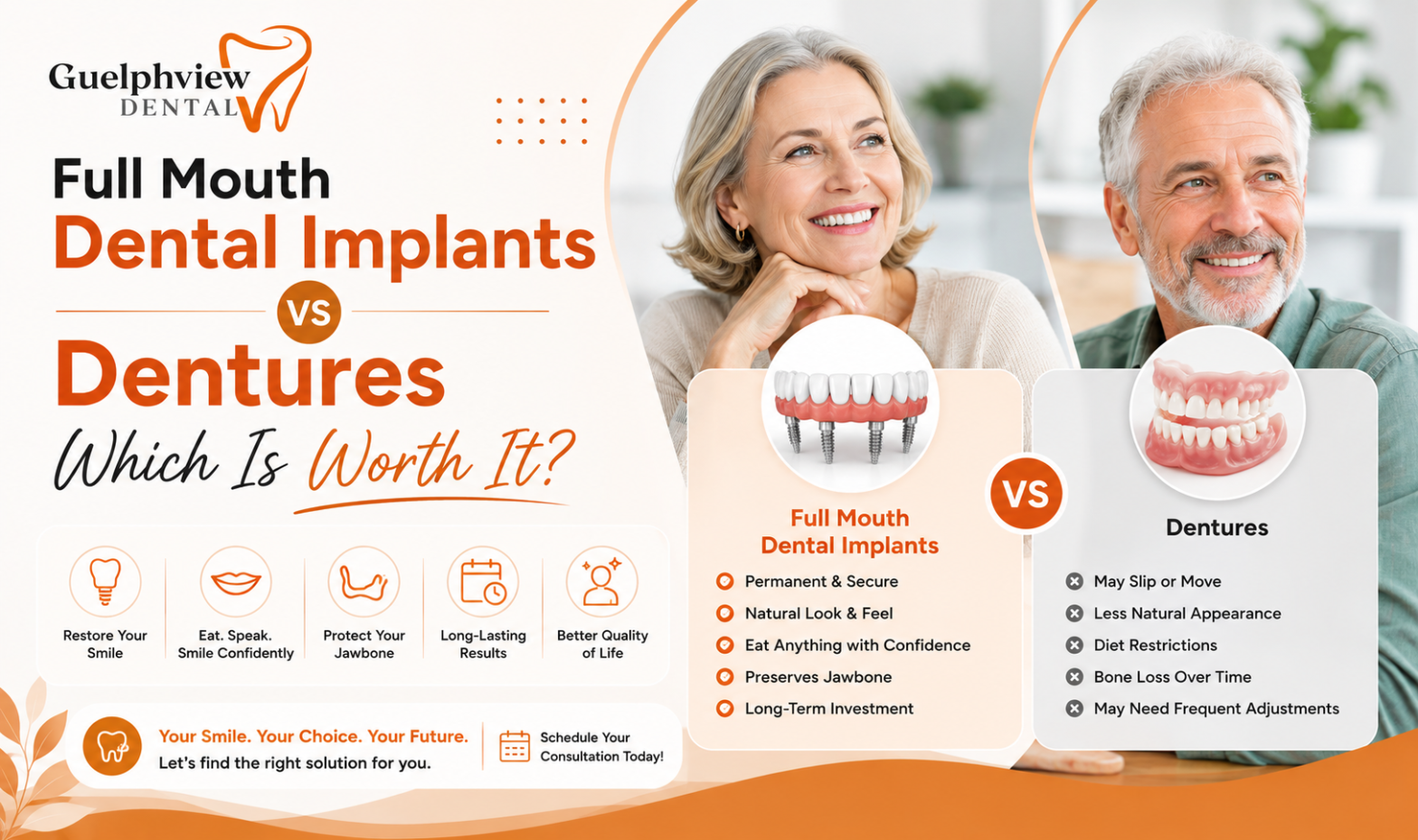
Full Mouth Dental Implants vs Dentures — Which Is Worth It?
Replacing multiple missing teeth is a major decision that affects daily comfort, confidence, eating habits, and long-term oral health. Many patients compare traditional dentures with modern dental implants to understand which option delivers better value over time. While dentures have been used for decades, advances in dental implant treatment now offer stronger stability, improved appearance, and longer-lasting results.
If you are considering a full-mouth restoration, understanding the differences between dentures and a tooth implant solution can help you make the right choice for your lifestyle and oral health goals. According to the Canadian Dental Association (CDA), tooth implants are used to replace missing roots and support replacement teeth with results that look and act much like natural teeth.
Understanding Full Mouth Dental Implants
Implants are artificial tooth roots placed into the jawbone to support replacement teeth. A full-mouth restoration typically uses multiple implants to anchor a complete set of upper or lower teeth.
Unlike removable dentures, implants stay fixed in place. They are designed to look, feel, and function like natural teeth.
A complete tooth implant procedure usually includes:
- Initial consultation and digital scans
- Tooth extraction if needed
- Implant placement into the jawbone
- Healing period for bone integration
- Placement of custom-made replacement teeth
Modern implant treatment can restore a full smile using techniques such as All-on-4 or All-on-6, reducing treatment time while improving stability. If tooth extraction is needed as part of your plan, our team coordinates this seamlessly with the implant procedure.
What Are Dentures?
Dentures are removable appliances designed to replace missing teeth and surrounding tissue. They rest on the gums and may be complete or partial depending on how many teeth are missing. Explore our custom dentures service to learn what options are available at our Georgetown clinic.
Traditional dentures remain a common option because they are generally more affordable upfront. However, they may require adjustments over time as the jawbone changes shape.
Many people initially choose dentures due to lower starting costs, but long-term comfort and maintenance often become important considerations later.
Appearance and Natural Feel
One of the biggest reasons patients choose implants is the natural appearance.
Implants closely mimic real teeth because they are anchored into the jawbone. This creates a secure and realistic smile without the slipping or shifting that some denture wearers experience.
Dentures have improved significantly in appearance over the years, but they can still feel bulky for some individuals. Facial sagging may also develop over time because dentures do not prevent jawbone loss.
With a tooth implant solution, the jawbone receives stimulation similar to natural tooth roots, helping preserve facial structure and maintaining a more youthful appearance. For patients interested in complete smile restoration, our dental crowns and bridges service can complement implant treatment for comprehensive results.
Comfort plays a major role when comparing dentures and implants.
Dentures
Traditional dentures may move while speaking or eating. Adhesives are often required to improve stability. Some patients also report sore spots or gum irritation after extended wear.
Hard or sticky foods can become difficult to eat comfortably.
Dental Implants
Implants remain securely fixed in place. Most patients report improved comfort because they function more like natural teeth.
Activities such as speaking clearly, laughing confidently, and chewing tougher foods become easier after recovery.
For patients seeking long-term convenience, implant-supported teeth often provide a more natural day-to-day experience. Have questions? Browse our frequently asked questions or book a consultation with our team.
Comfort During Daily Activities
Jawbone Health and Long-Term Oral Support
One important difference between dentures and implants is how they affect the jawbone.
When teeth are lost, the jawbone gradually shrinks due to lack of stimulation. Dentures sit on top of the gums and do not stop this bone loss.
Over time, shrinking bone can cause dentures to loosen, affecting comfort and fit.
Implants help preserve bone because they integrate directly with the jaw — a process known as osseointegration that supports stronger oral health over the long term. The Ontario Dental Association recognizes this as a key advantage of implant-supported tooth replacement.
Patients who choose implant treatment often experience better jaw stability and fewer fit-related issues in the future.
Durability and Lifespan
Durability is another major factor when deciding between implants and dentures.
Dentures Lifespan
Most dentures need adjustments, relining, or replacement every few years due to natural bone changes and wear.
Although dentures can last for years with proper care, ongoing maintenance is common.
Dental Implants Lifespan
Implants are designed as a long-term solution. With proper oral hygiene and regular dental visits, they can last for decades.
The replacement teeth attached to implants may occasionally require maintenance, but the implant posts themselves are highly durable.
For many patients, the long-term reliability of a tooth implant system offsets the higher initial investment. Pair your implants with our dental cleaning and prevention program to protect your investment and maintain optimal oral health.
Eating and Nutrition Benefits
Missing teeth can limit food choices, affecting overall nutrition.
Dentures may reduce biting strength, making crunchy vegetables, nuts, or certain meats harder to enjoy.
Implants provide significantly better chewing power compared to removable dentures. This allows patients to maintain a more balanced and varied diet.
Many people notice increased confidence when eating in social settings after completing a tooth implant procedure.
Speech and Confidence
Loose dentures can sometimes shift during conversation, causing speech difficulties or self-consciousness.
Implants provide improved stability, helping many patients speak more naturally and confidently.
Because implants closely resemble natural teeth, they often help patients feel more comfortable in professional and social interactions.
Confidence improvements are one of the most commonly reported benefits of implant treatment.
Maintenance and Daily Care
Caring for Dentures
Dentures require daily removal and cleaning. They should be soaked overnight and handled carefully to avoid damage.
Regular adjustments may also be needed to maintain proper fit.
Caring for Dental Implants
Implants are cared for similarly to natural teeth. Patients should:
- Brush twice daily
- Floss regularly
- Visit the dentist for routine checkups
- Maintain healthy gum care habits
Many patients appreciate the simplicity of caring for implants without removing them each night.
Cost Comparison — Short-Term vs Long-Term Value
- Replacement costs
- Adhesive products
- Relining procedures
- Ongoing adjustments
Who Is a Good Candidate for Dental Implants?
Many adults with missing teeth may qualify for implant treatment, but candidacy depends on factors such as:
- Jawbone density
- Gum health
- Overall medical condition
- Smoking habits
- Commitment to oral hygiene
Patients with bone loss may still qualify through bone grafting procedures.
A professional consultation with digital imaging is the best way to determine whether implant treatment is suitable for your situation. Our full mouth reconstruction service is also available for patients who need multiple restorations coordinated in a single plan.
When Dentures May Still Be the Right Choice
Although implants offer many advantages, dentures may still be appropriate for some individuals.
Dentures can be beneficial for:
- Patients seeking lower upfront costs
- Individuals with medical conditions limiting surgery
- Those needing a faster temporary solution
- Patients with severe bone loss who prefer non-surgical treatment
Every smile restoration plan should be customized according to the patient’s goals, health condition, and budget.
Full Mouth Dental Implants vs Dentures — Which Is Worth It?
Frequently Asked Questions
Q1. Are dental implants better than dentures?
Implants generally provide better stability, comfort, and long-term oral health benefits compared to removable dentures. However, the best option depends on individual needs and budget. Visit our FAQs page for more common questions answered by our team.
Q2. How long does a tooth implant procedure take?
The timeline varies depending on healing and bone condition. Most full-mouth implant treatment plans take several months from consultation to final restoration.
Q3. Do dental implants look natural?
Yes. Modern implants are custom-designed to closely match natural teeth in shape, color, and appearance.
Q4. Are dentures painful to wear?
Some patients experience soreness or irritation with dentures, especially during the adjustment period. Proper fitting and regular visits improve comfort. If you experience sudden pain, our emergency dental team is available to help.
Q5. Can older adults get dental implants?
Yes. Many older adults successfully receive implants if they have adequate bone support and good overall health. Our root canal therapy and restorative services are also available to support overall oral health prior to implant placement.
About the Author
This article was reviewed and prepared by an experienced dental content specialist focused on patient education, restorative dentistry topics, and evidence-based oral health information. The goal is to provide clear, trustworthy guidance that helps readers make informed decisions about modern tooth replacement options.
Final Thoughts
Choosing between dentures and tooth implants is more than a cosmetic decision — it directly affects comfort, confidence, oral health, and daily quality of life. While dentures continue to be a practical option for some patients, modern implant treatment offers a more stable and long-term solution that closely mimics natural teeth.
A properly planned tooth implant procedure can improve chewing ability, preserve jawbone structure, support clearer speech, and help maintain facial appearance over time. Many patients also appreciate the convenience of fixed teeth that do not require adhesives or nightly removal.
Although implant treatment typically involves a higher initial investment, the long-term durability and improved lifestyle benefits often make it worthwhile for patients seeking a permanent solution. Dentures may still be suitable for individuals looking for a non-surgical or lower-cost option, but they usually require more maintenance and periodic adjustments over the years.
The best choice depends on your oral health condition, budget, lifestyle, and long-term expectations. Consulting with an experienced dental professional can help determine whether dental implants or dentures are the right fit for restoring your smile confidently and comfortably. Book your consultation today at Guelphview Dental in Georgetown, ON.