
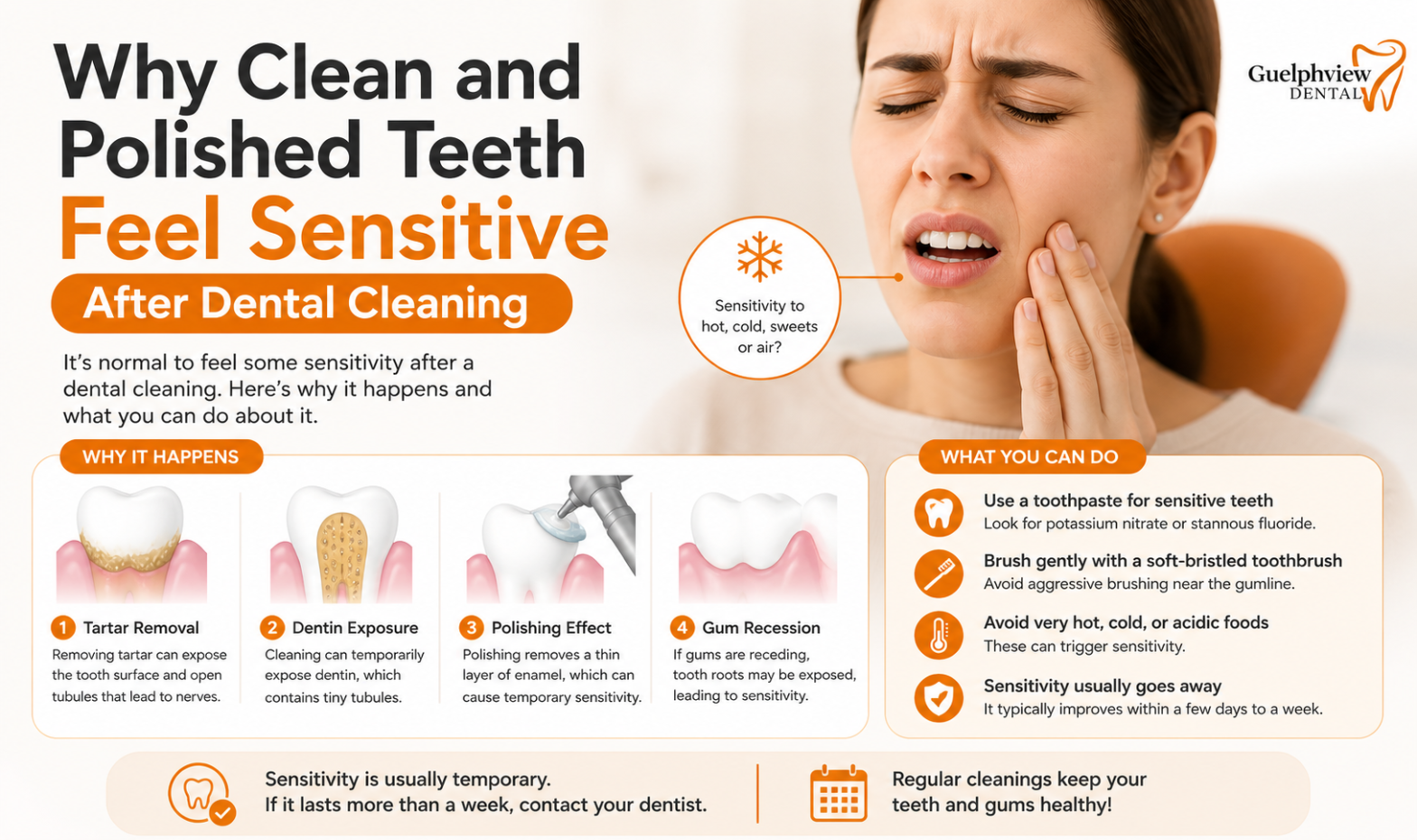
Why Clean and Polished Teeth Feel Sensitive After Dental Cleaning
A professional dental visit leaves your smile feeling fresh, smooth, and noticeably brighter. That clean and polished teeth feeling is exactly what most people expect after a routine appointment. But sometimes, this refreshed feeling comes with an unexpected side effect—temporary tooth sensitivity.
If your teeth feel sensitive after achieving clean and polished teeth, you’re not alone. This is a common, short-term response that usually fades quickly. Understanding why it happens—and how to manage it—can help you stay confident in your oral care routine.
What Happens During a Dental Cleaning?
A dental cleaning is designed to go beyond what brushing and flossing can achieve at home. It focuses on removing buildup, bacteria, and stains that accumulate over time.
During a typical visit, your dentist or hygienist will:
- Perform a routine remove plaque buildup from teeth and gumlines
- Eliminate hardened tartar deposits through scaling
- Polish teeth to create a smooth, clean and polished teeth surface
- Offer a fresh breath treatment or fluoride application
These steps are essential to improve oral hygiene and prevent long-term dental issues. However, they can also temporarily expose sensitive areas of your teeth.
At Guelphview Dental, our family dentistry services ensure patients of every age receive thorough, professional cleanings tailored to their individual oral health needs.
Why Clean and Polished Teeth Feel Sensitive After Cleaning
Experiencing sensitivity after achieving clean and polished teeth doesn’t mean something went wrong. In fact, it often indicates that your teeth are adjusting to a cleaner, healthier state.
1. Removal of Plaque and Tartar Layers
When routine remove plaque buildup is performed, the protective layer covering certain parts of your teeth is eliminated. While plaque is harmful, it can shield sensitive areas like dentin.
Once removed, your clean and polished teeth may react more strongly to hot, cold, or sweet foods.
2. Exposure of Dentin (The Sensitive Layer)
Beneath your enamel lies dentin—a softer layer filled with microscopic tubules connected to nerve endings. When enamel is thin or gums recede, dentin becomes exposed.
After cleaning, your clean and polished teeth may feel more sensitive because these tubules are now directly stimulated by temperature or pressure changes.
According to the Ontario Dental Association, tooth sensitivity occurs when the protective enamel is damaged, exposing the dentin layer below the gumline—a condition that is closely associated with post-cleaning sensitivity.
3. Gum Irritation or Minor Recession
If your gums were inflamed due to buildup, the cleaning process may cause slight irritation. As the gums begin to heal and tighten, they may temporarily expose root surfaces.
This is another reason why clean and polished teeth can feel sensitive for a short time.
4. Deep Cleaning Procedures
If your treatment included scaling below the gumline, sensitivity may be more noticeable. This deeper cleaning targets bacteria in areas that are naturally more sensitive.
If your dentist identifies deeper issues during this process, they may recommend additional care such as root canal therapy to address the source of persistent pain and protect your long-term oral health.
5. Enamel Condition
If your enamel is already weakened due to diet, brushing habits, or grinding, your clean and polished teeth may reveal underlying sensitivity that was previously hidden.
How Long Does Sensitivity Last After Clean and Polished Teeth?
- Mild sensitivity: a few hours to 2–3 days
- Moderate sensitivity: up to 5–7 days
Who Is More Likely to Experience Sensitivity?
You may notice more sensitivity after clean and polished teeth if you:
- Haven’t had a cleaning in a long time
- Have gum recession
- Already experience sensitive teeth
- Have enamel wear or erosion
- Undergo deep cleaning procedures
The good news is that this sensitivity is manageable and often decreases with regular care.
How to Reduce Sensitivity After Clean and Polished Teeth
You don’t have to live with discomfort after your dental visit. These simple strategies can help:
Use Desensitizing Toothpaste
Switching to a toothpaste for sensitive teeth can block nerve signals and strengthen enamel, reducing discomfort after clean and polished teeth.
Avoid Extreme Temperatures
For the first 24–48 hours, avoid very hot or cold foods and drinks. This allows your clean and polished teeth to adjust.
Practice Gentle Brushing
Use a soft-bristled toothbrush and light pressure. This protects your enamel while continuing to improve oral hygiene.
Stay Consistent With Oral Care
Regular brushing, flossing, and dental visits reduce heavy buildup, making future clean and polished teeth experiences more comfortable.
Consider Fluoride Treatment
Fluoride helps strengthen enamel and reduce sensitivity. Many dentists include it as part of a fresh breath treatment or preventive care routine.
During your cleaning appointment, your dental team may also recommend digital X-rays to accurately detect areas of enamel thinning or early decay that may be contributing to your sensitivity.
Is Sensitivity After Clean and Polished Teeth a Good Sign?
- Buildup has been successfully removed
- Your gums are starting to heal
- Your mouth is transitioning to a healthier state
When to Be Concerned About Sensitivity
- Sharp or severe pain
- Sensitivity lasting more than 7–10 days
- Pain when biting or chewing
- Swollen or bleeding gums
Long-Term Benefits of Clean and Polished Teeth
Even with short-term sensitivity, maintaining clean and polished teeth offers major long-term advantages:
- Reduced risk of cavities and gum disease
- Healthier gums and stronger enamel
- Improved oral hygiene and fresher breath
- A brighter, more confident smile
Avoiding dental cleanings due to temporary sensitivity can lead to more serious problems over time.
Once your teeth and gums have stabilised after a professional cleaning, many patients choose to enhance their results with our teeth whitening service—a safe, professional-grade treatment that can brighten your smile by several shades.
How to Prevent Sensitivity in Future Cleanings
If you want to avoid sensitivity after clean and polished teeth in the future, follow these steps:
- Schedule regular cleanings every 6 months
- Use sensitivity toothpaste before your appointment
- Inform your dentist about past sensitivity
- Maintain daily oral hygiene habits
Consistency helps reduce buildup, making each cleaning easier and more comfortable.
Patients undergoing orthodontic treatment may need more frequent cleanings, as brackets and wires make plaque removal more challenging. Our orthodontist services work alongside your preventive care plan to keep your smile healthy throughout treatment.
It’s equally important to establish these habits early in life. Our children’s dentistry team helps younger patients build a positive relationship with professional cleanings, setting the foundation for a lifetime of healthy, clean and polished teeth.
When Cleaning Reveals the Need for Restorative Care
Occasionally, a routine dental cleaning uncovers issues that require restorative treatment. Persistent sensitivity may point to decay that needs attention, or teeth that are too compromised to be saved with simple care.
In some cases, a damaged or severely decayed tooth may require a tooth extraction. Our gentle extraction procedures minimize discomfort and help preserve the health of surrounding teeth.
For patients concerned about the materials used in restorative work, we also offer amalgam-free dental fillings—a safer, tooth-coloured alternative to traditional mercury-based materials, helping restore your smile naturally and comfortably.
For comprehensive, evidence-based guidance on preventive oral care, the Canadian Dental Association’s oral health resources offer trusted information on everything from brushing techniques to the role of fluoride in protecting your enamel.
Frequently Asked Questions
Q1. Why do clean and polished teeth feel sensitive after cleaning?
Because plaque and tartar are removed, exposing sensitive areas like dentin and root surfaces.
Q2. How long does sensitivity last after clean and polished teeth?
It usually lasts a few days, but in some cases, it may take up to a week to fully resolve.
Q3. Can I brush my teeth after getting clean and polished teeth?
Yes, but use a soft-bristled toothbrush and gentle pressure to avoid irritation.
Q4. Is sensitivity after dental cleaning normal?
Yes, mild sensitivity is common and typically temporary after clean and polished teeth.
Q5. How can I prevent sensitivity after future cleanings?
Maintain regular dental visits, use desensitizing toothpaste, and follow a consistent oral care routine.
About the Author
This article is created by an experienced dental content specialist focused on patient education and preventive care. The content is developed using current clinical knowledge and practical insights to ensure accuracy, clarity, and real-world usefulness. Each piece is written to help readers better understand their oral health and make informed decisions with confidence.
Final Thoughts
Clean and polished teeth are a sign of a healthy, well-maintained smile. While temporary sensitivity can occur after a dental cleaning, it is usually mild and short-lived. The benefits of removing plaque, improving oral hygiene, and maintaining fresh breath treatment results far outweigh this brief discomfort. Explore our full range of dental cleaning and prevention services to learn how we help you maintain your best smile year-round.
With the right care and preventive steps, you can enjoy the feeling of clean and polished teeth without worry—and keep your smile healthy for years to come.