
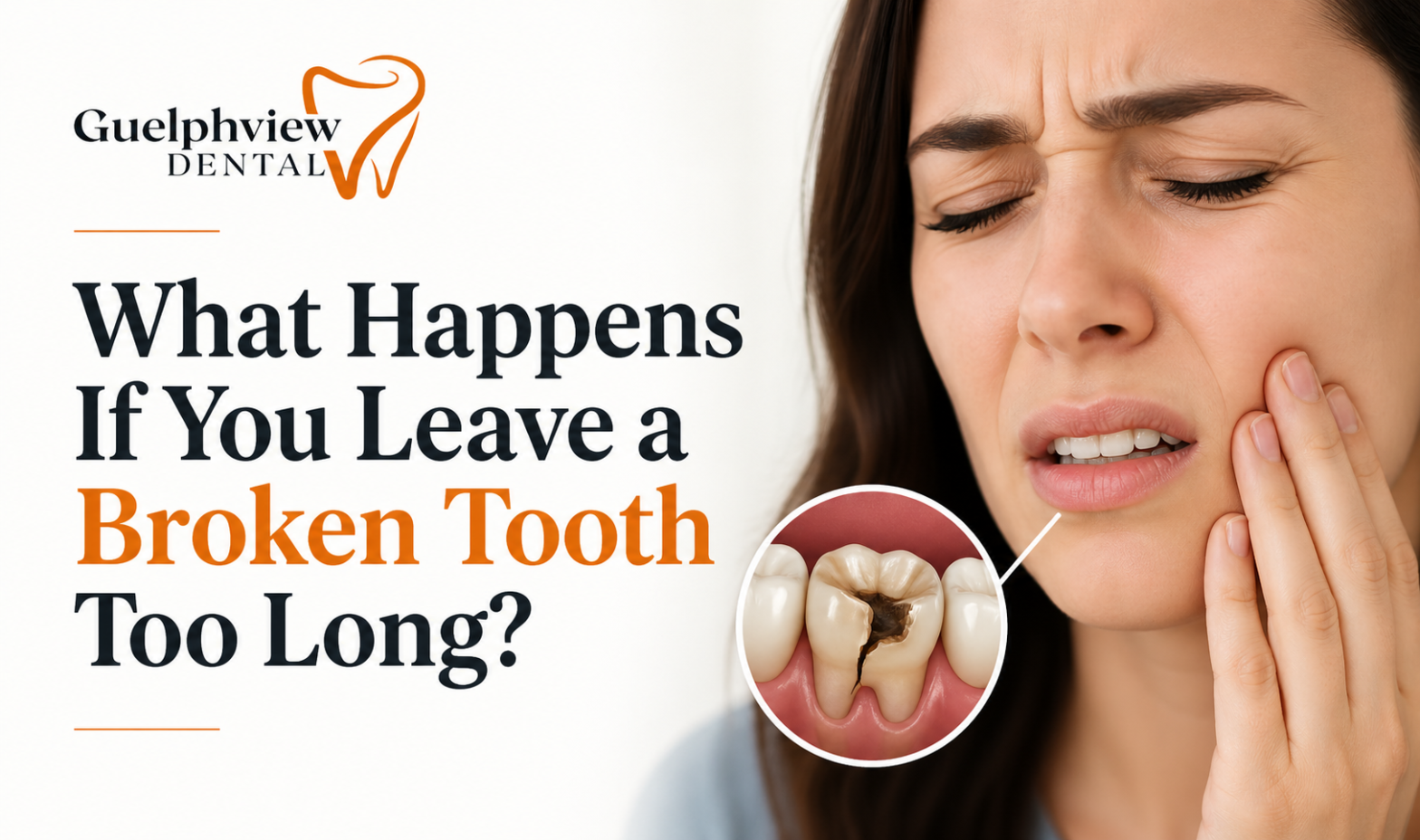
What Happens If You Leave a Broken Tooth Too Long?
A broken tooth might not always feel like an emergency—but waiting too long can turn a small issue into a serious dental problem. Whether it’s a chip, crack, or fracture, delaying care increases the risk of infection, pain, and even tooth loss. If you’re searching for an emergency dentist, it usually means something doesn’t feel right—and with a broken tooth, that instinct is often correct. Getting immediate dental treatment can make the difference between saving and losing your tooth.
At Guelphview Dental, our experienced dental team is here to help patients in Georgetown and surrounding areas get the urgent care they need, when they need it most. Whether you need a same-day appointment or guidance on what to do next, we’re just a call away.
Why a Broken Tooth Needs Immediate Attention
Teeth are made of multiple layers—enamel, dentin, and pulp. When a tooth breaks, these protective layers are compromised, exposing sensitive inner structures to bacteria. Without urgent dental care, the damage doesn’t stay the same—it progresses quickly. Even a small crack can deepen with everyday chewing, allowing bacteria to enter and cause infection. This is why our digital X-ray services play a critical role in early detection—helping us assess the full extent of damage before it worsens.
What Happens If You Leave a Broken Tooth Untreated
1. Pain Gets Worse Over Time
Initially, you may only feel mild discomfort. But as the crack extends deeper:
- Sensitivity to hot and cold increases
- Pain becomes sharp or constant
- Chewing becomes difficult
This is often the first sign you need an emergency dentist. Our family dentistry team is trained to assess pain quickly and provide same-day relief.
2. Bacteria Enter the Tooth
A broken tooth creates an opening for bacteria. Once inside, they attack the pulp, leading to infection.
Common symptoms:
- Persistent toothache
- Bad taste in the mouth
- Gum irritation around the tooth
At this stage, visiting an emergency dental clinic is essential. Regular dental cleanings and prevention can help reduce your risk of future bacterial buildup and infection.
3. Infection Can Turn Into an Abscess
If left untreated, infection can form an abscess—a pocket of pus caused by bacteria. This can lead to:
- Severe throbbing pain
- Facial swelling
- Fever or fatigue
- Difficulty opening your mouth
An abscess requires immediate dental treatment to prevent the infection from spreading. In many cases, root canal therapy is the most effective way to remove the infection and save the tooth.
4. The Tooth Structure Weakens
A minor chip can quickly become a major fracture. Everyday pressure from chewing can worsen the damage. Consequences include:
- Larger portions of the tooth breaking off
- Reduced ability to restore the tooth
- Increased need for complex procedures
Seeing an emergency dentist early improves the chances of saving the tooth. We also offer amalgam-free restorations for durable, natural-looking repairs that protect weakened tooth structure.
5. Risk of Tooth Loss Increases
When damage or infection becomes severe, the tooth may not be repairable. Tooth loss can cause:
- Shifting of surrounding teeth
- Bite misalignment
- Jawbone deterioration over time
Early urgent dental care helps prevent these long-term complications. If a tooth cannot be saved, our team offers dental implants and dentures as reliable tooth replacement options.
6. Gum and Bone Damage
A broken tooth doesn’t just affect enamel—it can impact surrounding tissues. Untreated cases may lead to:
- Gum infections
- Bone loss around the tooth
- Chronic oral health problems
This is why an emergency dental clinic visit should never be delayed. Our team also recommends routine oral cancer screenings to monitor surrounding tissue health and catch any abnormalities early.
7. Effects on Overall Health
Oral infections can spread beyond the mouth. Bacteria from a tooth infection can enter the bloodstream and contribute to systemic issues. Potential risks include:
- Increased inflammation in the body
- Complications for existing health conditions
- Spread of infection to other areas
Prompt immediate dental treatment protects both oral and general health. The Ontario Dental Association recommends timely dental care to prevent oral infections from contributing to broader systemic health concerns.
Common Causes of Broken Teeth
Understanding the cause helps prevent future issues:
- Biting hard foods like ice or nuts
- Accidental trauma or injury
- Teeth grinding (bruxism)
- Large fillings weakening the tooth
- Untreated cavities
No matter the cause, early care from an emergency dentist is key. If grinding is a concern, our orthodontic services team can also assess bite-related issues that contribute to tooth damage.
Treatment Options for a Broken Tooth
Treatment depends on the severity of the damage:
Minor Damage
- Dental bonding
- Smoothing sharp edges
Moderate Damage
- Dental crowns to restore strength and function
Severe Damage or Infection
- Root canal therapy to remove infection
- Crown placement for protection
Extensive Damage
- Tooth extraction followed by replacement options
An experienced emergency dental clinic will recommend the best approach to preserve your natural tooth whenever possible. For tooth replacement after extraction, our dental implants and dentures services offer lasting, natural-looking solutions.
Canadian patients may also be eligible for coverage under the Government of Canada’s Canadian Dental Care Plan, which covers a range of emergency and restorative dental procedures for eligible residents.
When Should You Call an Emergency Dentist Immediately?
- Severe or persistent tooth pain
- Visible cracks or missing pieces
- Swelling in gums or face
- Sensitivity that lingers
- Signs of infection (pus, bad taste, fever)
- Difficulty chewing
What to Do Before You Reach an Emergency Dental Clinic
If you can’t get help right away, take these temporary steps:
- Rinse your mouth with warm salt water
- Avoid chewing on the affected side
- Cover sharp edges with dental wax or sugar-free gum
- Use over-the-counter pain relief if needed
- Keep the area clean
These are short-term solutions—not a substitute for immediate dental treatment. Contact our clinic or review our frequently asked questions for more guidance on handling dental emergencies before your appointment.
How to Prevent Broken Teeth in the Future
After treatment, protect your smile with these steps:
- Avoid chewing hard objects
- Wear a mouthguard during sports
- Use a night guard if you grind your teeth
- Maintain regular dental checkups
- Treat cavities early
Prevention reduces the chances of needing another emergency dentist visit. Ontario residents with children can also take advantage of programs like Healthy Smiles Ontario to access funded preventive dental care. Our children’s dentistry services are also designed to build healthy habits from an early age.
Frequently Asked Questions
Q1. Is a broken tooth considered a dental emergency?
Yes, in many cases it is. Even if there's no pain initially, a broken tooth can worsen quickly. Seeing an emergency dentist early helps prevent infection and more serious damage.
Q2. How long can I wait before fixing a broken tooth?
Delaying treatment increases risks significantly. It's best to seek urgent dental care within 24–48 hours to avoid complications like infection or tooth loss.
Q3. Can a broken tooth heal on its own?
No, teeth cannot repair themselves. Professional immediate dental treatment is required to restore the tooth and prevent further damage.
Q4. What are the signs of infection in a broken tooth?
Common signs of an infected broken tooth include severe tooth pain, swelling, sensitivity to hot or cold, bad breath, pus around the tooth, and fever. It’s important to visit a dentist quickly to prevent the infection from spreading.
Q5. What is the most common treatment for a broken tooth?
The most common treatment for a broken tooth depends on the damage and may include dental bonding, a crown, filling, root canal treatment, or tooth extraction in severe cases. Early dental care helps save the tooth and reduce pain.
About the Author
This article is written and reviewed by dental content specialists with expertise in patient education and clinical research. The information is based on current dental guidelines and real-world treatment practices used in modern clinics. The goal is to provide accurate, trustworthy, and easy-to-understand guidance so patients can make informed decisions about their oral health and seek care at the right time.
Final Thoughts
A broken tooth is never something to ignore. What may start as a small crack can quickly escalate into pain, infection, and even tooth loss. Acting early with the help of an emergency dentist ensures the best possible outcome. Timely urgent dental care not only saves your tooth but also prevents serious complications. If you notice any symptoms, don’t wait—seek immediate dental treatment and protect your oral health.