
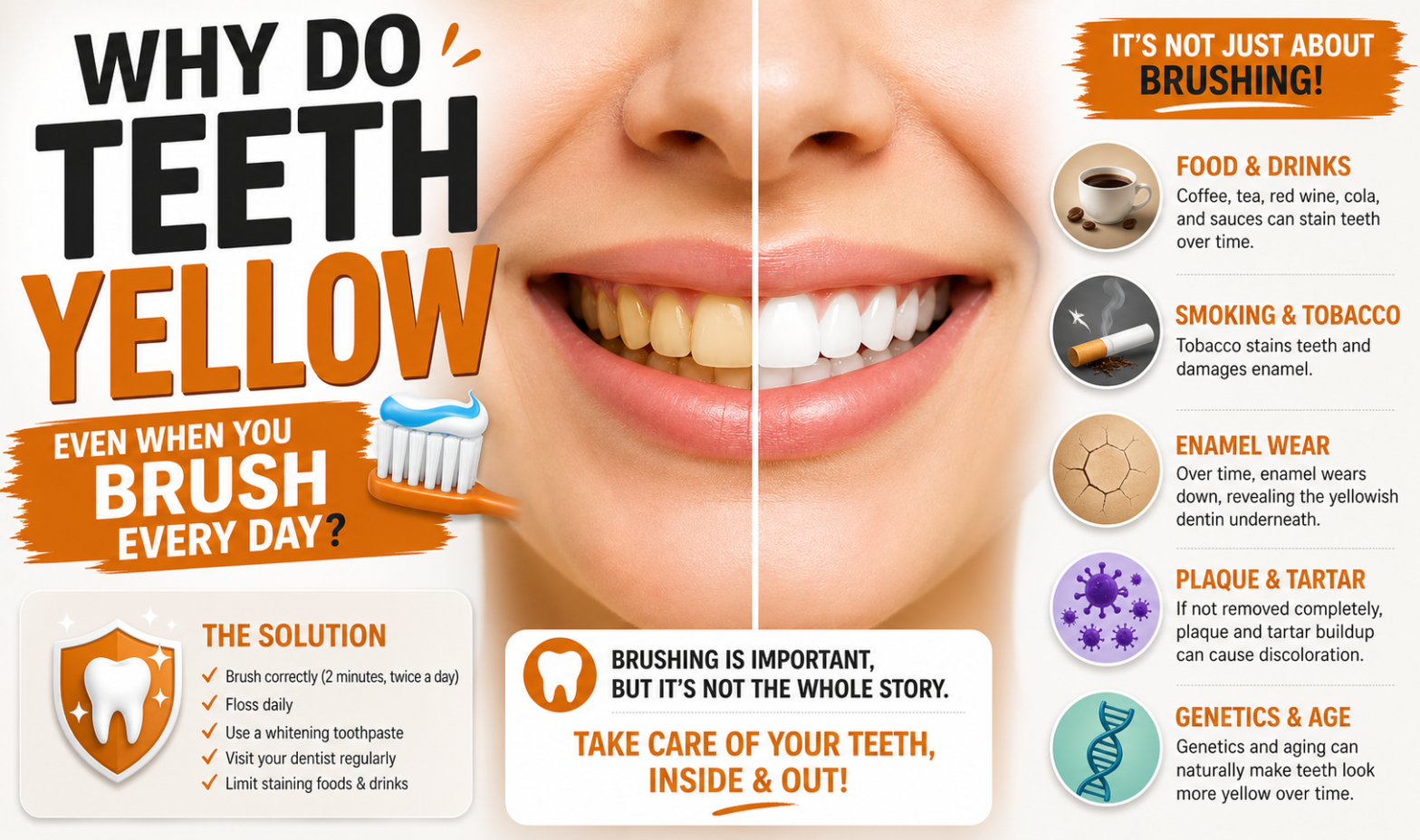
Why Do Teeth Yellow Even When You Brush Every Day?
Brushing your teeth every day is one of the most basic habits for maintaining oral health. So it can feel confusing—and even frustrating—when your teeth still appear yellow despite your efforts. Many people assume that daily brushing should automatically lead to a bright white smile, but that’s not always how it works. If you’re concerned about your dental health, speaking with a trusted Dentist is always a good first step.
Tooth color is influenced by a range of factors beyond simple hygiene. From natural aging to diet and even genetics, several elements play a role in how your teeth look over time. Understanding these causes can help you set realistic expectations and make better decisions about your oral care routine.
This guide explains why teeth can turn yellow even with consistent brushing and what you can do to improve their appearance safely and effectively.
Understanding the Natural Color of Teeth
Teeth are not naturally pure white. Their appearance depends on two main layers:
- Enamel: The outer layer, which is slightly translucent and appears white
- Dentin: The inner layer, which has a naturally yellow tone
When enamel is thick and healthy, it masks the color of the dentin beneath it. However, as enamel wears down over time, the dentin becomes more visible, giving teeth a yellowish appearance.
This means that even if your teeth are clean, they may not look bright white—and that’s completely normal.
Common Reasons Teeth Turn Yellow
1. Enamel Wear Over Time
Enamel is strong, but it’s not indestructible. Everyday habits such as consuming acidic foods, drinking soft drinks, or even brushing too hard can gradually wear it down.
As enamel becomes thinner, the yellow dentin underneath starts to show through more clearly. This is one of the most common reasons teeth appear yellow despite good oral hygiene. Our Amalgam Free dentistry approach at Guelphview Dental reflects our commitment to protecting your enamel and overall tooth health.
2. Staining Foods and Beverages
Certain foods and drinks contain pigments that can stick to the surface of your teeth. Over time, these stains build up and become more noticeable.
Common culprits include:
- Coffee and tea
- Red wine
- Dark-colored sodas
- Berries and sauces
Even if you brush regularly, these substances can leave behind stains that are difficult to remove with routine cleaning alone. Our Teeth Whitening service is designed to tackle exactly these kinds of surface stains effectively.
3. Plaque and Tartar Buildup
When plaque isn’t fully removed, it hardens into tartar. Unlike plaque, tartar cannot be removed by brushing at home.
Tartar often has a yellow or brown tint and can make teeth look discolored. Professional cleaning is usually required to remove it effectively. At Guelphview Dental, our Dental Cleaning & Prevention service is specifically designed to remove plaque and tartar buildup safely and thoroughly.
4. Brushing Technique Matters
Brushing every day is important, but how you brush matters just as much as how often you do it.
Some common issues include:
- Brushing too quickly
- Missing certain areas, especially near the gums
- Using the wrong type of toothbrush
- Not brushing for long enough
These habits can leave behind plaque and stains, which contribute to a dull or yellow appearance over time. The Canadian Dental Association recommends brushing for at least two minutes, twice daily, using proper technique.
5. Tobacco Use
Smoking or using other tobacco products can cause significant staining. The chemicals in tobacco leave behind dark deposits that cling to enamel and penetrate deeper layers.
These stains are often stubborn and cannot be removed with regular brushing alone. If you’re experiencing severe staining from tobacco use, consider reaching out through our Contact Us page to discuss treatment options.
6. Natural Aging
As you age, your teeth naturally change in appearance. Enamel gradually becomes thinner, and dentin becomes more prominent.
This process happens even if you maintain excellent oral hygiene. It’s a normal part of aging and one of the main reasons older adults notice more yellowing. Our Family Dentistry services cater to patients of all ages, including seniors who may be managing age-related dental changes.
7. Medications and Health Factors
Certain medications can affect tooth color, especially when taken over long periods. Some may lead to internal discoloration that brushing cannot address.
In addition, conditions that affect enamel development can result in teeth that appear more yellow from an early age. For children experiencing these issues, our Children Dentistry team can provide early guidance and preventive care.
8. Genetic Factors
Just like hair or skin color, tooth color can be influenced by genetics. Some people naturally have thicker enamel or lighter dentin, while others may have a more yellow tone.
In these cases, brushing alone won’t significantly change the overall color of the teeth. For structural or genetic discoloration, our Dental Crowns & Bridges service can provide cosmetic solutions that restore both function and aesthetics.
What Brushing Can and Cannot Do
Brushing plays a crucial role in maintaining oral health, but it has its limits.
What Brushing Helps With:
- Removing food particles
- Reducing plaque buildup
- Preventing cavities and gum issues
- Keeping the mouth fresh and clean
What Brushing Cannot Do:
- Remove hardened tartar
- Restore lost enamel
- Eliminate deep or internal stains
- Change the natural color of dentin
Understanding these limitations can help you avoid unrealistic expectations and focus on solutions that actually work. You can learn more about available dental services on our Services page.
Ways to Improve the Appearance of Your Teeth
If brushing alone isn’t giving you the results you want, there are other options to consider.
Professional Cleaning
A thorough cleaning removes plaque and tartar that brushing cannot. It can also reduce surface stains and leave teeth looking noticeably brighter. Our Dental Cleaning & Prevention appointments are available for all ages and are a great starting point for a brighter smile.
Whitening Treatments
Whitening treatments can help lighten the color of your teeth by breaking down stains. Professional options are generally more effective and longer-lasting than over-the-counter products. Guelphview Dental offers professional Teeth Whitening treatments tailored to your needs.
Cosmetic Options
For deeper or more persistent discoloration, options like veneers or bonding can provide a more uniform appearance. These treatments are designed to improve both color and overall aesthetics. In severe cases, our Full Mouth Reconstruction service can provide a comprehensive solution to restore the health and appearance of your entire smile.
Tips to Prevent Further Yellowing
Daily Care:
- Brush twice a day for at least two minutes
- Use a soft-bristled toothbrush
- Floss regularly to remove buildup between teeth
- Rinse your mouth after consuming staining foods or drinks
Lifestyle Choices:
- Limit consumption of coffee, tea, and sugary drinks
- Avoid tobacco products
- Drink water throughout the day to help rinse away particles
Regular Checkups:
Routine visits allow for professional cleaning and early detection of potential issues. Consistent care over time makes a noticeable difference in both health and appearance. Health Canada also emphasizes the importance of routine dental care as part of a healthy lifestyle. Additionally, eligible Canadians may benefit from the Canadian Dental Care Plan (CDCP) — and Guelphview Dental is proud to be an Accepting CDCP provider.Why Professional Care Still Matters
Many people rely solely on brushing and home remedies, but professional care provides a deeper level of cleaning and insight.
Regular checkups help:
- Remove buildup that can’t be addressed at home
- Monitor changes in enamel and gum health
- Identify the underlying causes of discoloration
- Provide tailored recommendations based on individual needs
Taking a proactive approach ensures that your teeth stay healthy—not just clean on the surface. Our team also screens for early signs of disease during every visit through our Oral Cancer Screening service, so your overall oral health is always a priority.
Setting Realistic Expectations
It’s important to understand that “white” teeth don’t always mean “healthy” teeth—and vice versa. Natural tooth color varies from person to person, and a slightly yellow tone doesn’t necessarily indicate a problem.
Rather than aiming for an unrealistic standard, focus on maintaining strong, clean teeth and improving their appearance in a safe and informed way.
Frequently Asked Questions
Q1. Why do my teeth look yellow even though I brush regularly?
This can happen due to enamel thinning, stains from food and drinks, or buildup that brushing alone cannot remove.
Q2. Can yellow teeth become white again?
Surface stains may improve with better care, but deeper discoloration often requires professional treatment.
Q3. Is brushing harder or more often helpful?
Brushing too hard can actually damage enamel and make teeth appear more yellow over time. Gentle, consistent brushing is more effective.
Q4. How often should I get my teeth cleaned professionally?
Most people benefit from a professional cleaning every six months, though this may vary based on individual needs.
Q5. Are yellow teeth always a sign of poor oral hygiene?
No, yellowing can also result from aging, genetics, or enamel changes, even in people with good oral care habits.
About the Author
This article is written by a dental content specialist focused on creating clear, accurate, and patient-friendly educational resources. The content is based on current clinical understanding and is designed to help readers make informed decisions about their oral health through practical, easy-to-understand guidance.