
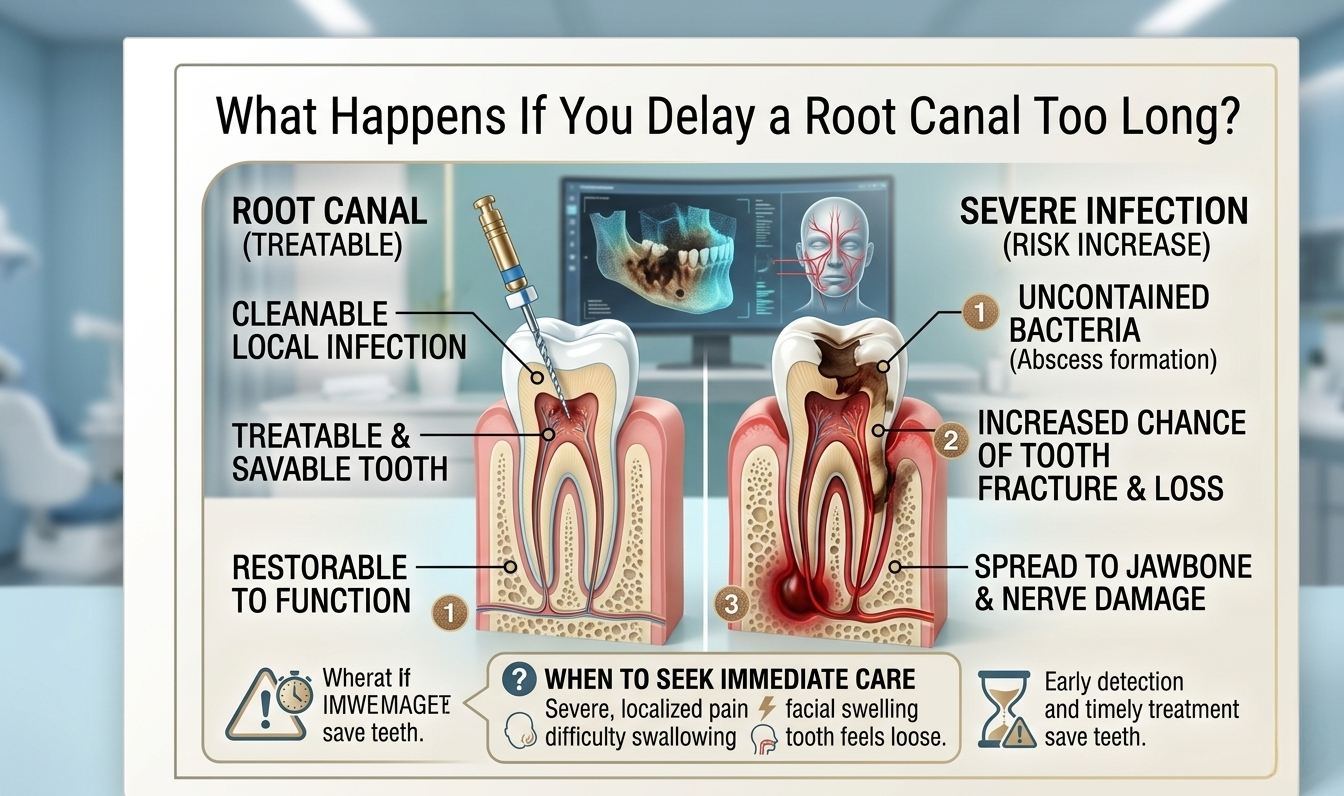
What Happens If You Delay a Root Canal Too Long?
Tooth pain has a way of interrupting everything—meals, sleep, even conversations. Yet many people still postpone treatment, hoping the discomfort will fade on its own. When a dentist recommends care from a root canal specialist, it’s usually because the inner tissue of the tooth is already infected or severely inflamed. Ignoring that advice can turn a manageable dental issue into a serious health concern.
This guide explains exactly what happens when you delay treatment, why timely care matters, and how a qualified professional—whether an endodontist specialist or a root canal treatment expert—can help you preserve your natural tooth and avoid complications. According to the Canadian Dental Association (CDA), untreated pulp infections can spread rapidly beyond the tooth and become a serious health risk if left unaddressed.
Understanding Root Canal Therapy
Root canal therapy is designed to treat infection inside the tooth. The pulp—soft tissue containing nerves and blood vessels—can become infected due to deep decay, cracks, trauma, or repeated dental procedures.
A root canal specialist removes the infected pulp, disinfects the area, and seals the tooth to prevent reinfection. Modern root canal therapy is precise, comfortable, and highly effective, often saving teeth that would otherwise need extraction. If a tooth cannot be saved, our team also provides tooth extraction as a gentle and affordable alternative.
Why Do People Delay a Root Canal?
Despite its benefits, many patients hesitate. Common reasons include:
- Fear of pain or dental procedures
- Misconceptions about treatment complexity
- Temporary relief from pain (which can be misleading)
- Cost concerns
- Busy schedules or procrastination
The problem is that dental infections don’t resolve on their own. Delaying treatment allows bacteria to spread, leading to more severe outcomes. Our emergency dental team is available for same-day appointments when pain becomes unbearable.
What Happens If You Wait Too Long?
1. Infection Spreads Beyond the Tooth
Initially, the infection is confined to the pulp. But without treatment, bacteria travel through the root canals into surrounding tissues. This can lead to:
- Bone infection
- Damage to nearby teeth
- Spread to gums and jaw
At this stage, treatment becomes more complex, and saving the tooth may no longer be possible. Patients may require full mouth reconstruction to address advanced bone and tissue damage caused by prolonged infection.
2. Severe and Persistent Pain
Tooth pain from an infected pulp doesn’t just disappear—it often worsens. You may experience:
- Sharp or throbbing pain
- Sensitivity to hot and cold
- Pain when chewing
- Pain that radiates to the jaw or ear
Ironically, if the nerve dies, the pain may temporarily stop. Many people mistake this for healing, but it actually means the infection is progressing silently.
3. Formation of a Dental Abscess
A delayed root canal can lead to an abscess—a pocket of pus caused by bacterial infection. Symptoms include:
- Swelling in the face or gums
- Fever
- Bad taste or odor
- Difficulty opening the mouth
An abscess is not just a dental issue; it can become a medical emergency if the infection spreads further. Our emergency dental care team provides prompt evaluation and treatment to prevent complications from worsening.
4. Tooth Loss Becomes Likely
One of the biggest risks of delay is losing the tooth altogether. When infection destroys too much structure or bone support, extraction may be the only option. Replacing a missing tooth with dental implants or dental crowns and bridges is more complex and costly than preserving your natural tooth with root canal therapy.
5. Increased Treatment Complexity and Cost
Early intervention is simpler and more predictable. Delaying treatment may require:
- Surgical procedures
- Bone grafting
- Multiple visits
- Advanced imaging and care
What could have been handled by a root canal treatment expert in one or two visits may turn into a lengthy and expensive process. In some cases, patients ultimately require full mouth reconstruction or removable dentures to restore lost function.
6. Risk to Overall Health
Oral infections don’t always stay local. In severe cases, bacteria can enter the bloodstream and affect other parts of the body. This is especially concerning for individuals with weakened immune systems or underlying health conditions. Timely care from an endodontist specialist helps minimize these risks. For further guidance on how oral health impacts overall wellness, the Ontario Dental Association (ODA) provides reliable patient education resources.
Signs You Should Not Ignore
If you notice any of the following symptoms, it’s important to seek care immediately:
- Persistent toothache
- Sensitivity that lingers after hot or cold exposure
- Swollen or tender gums
- Darkening of the tooth
- Pimples or pus near the gums
These signs often indicate infection that requires professional treatment. Regular digital X-rays allow our team to detect hidden infections and bone changes before symptoms become severe. We also offer oral cancer screening to monitor your overall oral health at every visit.
Benefits of Early Treatment
Choosing prompt care offers several advantages:
- Saves your natural tooth
- Relieves pain quickly
- Prevents spread of infection
- Reduces long-term costs
- Preserves your bite and smile
A root canal specialist uses advanced techniques to ensure the procedure is efficient and comfortable, often comparable to getting a standard filling. For families in need of comprehensive preventive and restorative care, our family dentistry service supports patients of all ages with proactive dental health management.
Modern Root Canal Therapy: What to Expect
Today’s procedures are far from outdated perceptions. With digital imaging, precise instruments, and effective anesthesia, treatment is:
- Minimally invasive
- Highly accurate
- Completed in fewer visits
- Focused on patient comfort
A trained endodontist specialist has additional expertise in diagnosing and managing complex cases, ensuring better outcomes. Our digital teeth X-ray technology plays a key role in mapping root anatomy before and during treatment for maximum precision.
How to Avoid Delays
Taking proactive steps can help you avoid complications:
- Don’t ignore early symptoms
- Schedule regular dental checkups
- Address cavities and cracks early
- Follow your dentist’s recommendations
- Seek a second opinion if unsure—but don’t postpone care indefinitely
Timely action is the difference between saving and losing a tooth.
Frequently Asked Questions
Q1. How long can you safely delay a root canal?
There is no safe delay once infection reaches the pulp. Even a few weeks can allow bacteria to spread, making treatment more complicated.
Q2. Can a tooth heal without root canal therapy?
No. Once the pulp is infected, it cannot heal on its own. Professional treatment is required to remove the infection.
Q3. Is root canal therapy painful?
Modern techniques make the procedure comfortable. Most patients report it feels similar to getting a filling.
Q4. What happens if I ignore an abscess?
An untreated abscess can spread infection to the jaw, face, or bloodstream, leading to serious health risks.
Q5. Should I see a general dentist or an endodontist specialist?
For straightforward cases, a general dentist may perform the procedure. For complex or severe infections, an endodontist specialist offers advanced expertise. Our family dentistry team will assess your case and refer you to the appropriate specialist when needed.
About the Author
This article is written by a dental professional with extensive clinical experience in restorative and endodontic care. The author focuses on patient education, preventive strategies, and evidence-based treatment approaches. With hands-on expertise in managing dental infections and advanced procedures, the goal is to provide clear, reliable guidance that helps patients make informed decisions about their oral health.