
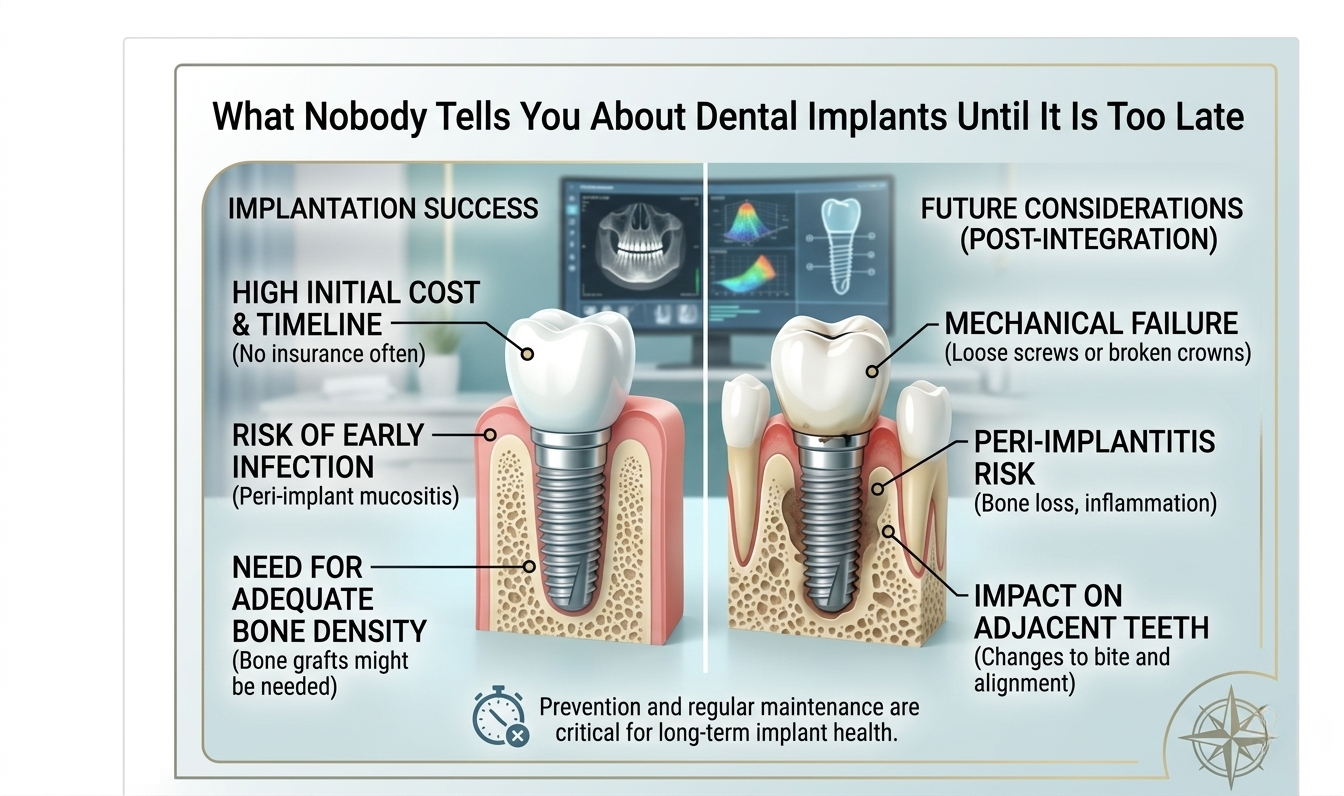
What Nobody Tells You About Dental Implants Until It Is Too Late
Dental implants are widely considered the most advanced solution for replacing missing teeth—but there are important details most people only discover after treatment has already begun.
Dental implants are artificial tooth roots, typically made of titanium, surgically placed into the jawbone to support a replacement tooth or bridge. They function like natural teeth by integrating with the bone through a process called osseointegration, providing long-term stability and support. According to the Canadian Dental Association, implants bond with the jawbone and attach to the gum, making them a uniquely stable solution among tooth replacement options.
If you’re exploring Dental Implants at Guelphview Dental, understanding the full picture—beyond the surface-level benefits—can help you avoid costly and irreversible mistakes.
Why Dental Implants Are Different From Other Options
Unlike traditional methods in missing tooth replacement, implants don’t just sit on the gums or rely on adjacent teeth. They replace the root structure itself. If you are currently considering Dental Crowns & Bridges or Dentures as alternatives, the table below highlights the key differences:
Dental Implants vs Bridges vs Dentures
| Feature | Dental Implants | Bridges | Dentures |
|---|---|---|---|
| Stability | Permanent, anchored in bone | Fixed but supported by teeth | Removable |
| Bone Preservation | Yes | No | No |
| Lifespan | 15-25+ years | 7-10 years | 5-8 years |
| Maintenance | Like natural teeth | Moderate | High |
This is why implant dentistry is often recommended—but it also comes with responsibilities that are rarely discussed upfront.
1. The Tooth Implant Procedure Is a Multi-Stage Process
The tooth implant procedure is not a single appointment. It involves careful planning and healing phases.
What the Timeline Really Looks Like:
- Consultation and 3D imaging
- Surgical placement of the implant
- Healing phase (3–6 months for osseointegration)
- Abutment placement
- Final crown placement
What nobody tells you: Even in straightforward cases, the process takes several months. Rushing healing increases the risk of implant failure.
2. Bone Loss Starts Immediately After Tooth Loss
- Bone volume decreases
- Facial structure may change
- Implant placement becomes more complex
3. Not Everyone Qualifies Right Away
While dental implants are highly successful, not every patient is immediately eligible.
Common Barriers:
- Low bone density
- Gum disease
- Smoking
- Chronic health conditions
In such cases, preparatory treatments are necessary before proceeding with implant dentistry. Patients with advanced gum disease may first need to address their condition through Dental Cleaning & Prevention services before being cleared for an implant.
What nobody tells you: Your “simple implant” plan may turn into a staged treatment process depending on your oral health.
4. Implants Don’t Get Cavities—But They Can Fail
Dental implants cannot decay, but they are still vulnerable to complications.
Common Causes of Implant Failure:
- Peri-implantitis (infection around the implant)
- Poor oral hygiene
- Smoking
- Improper placement
What nobody tells you: Neglecting care can lead to bone loss around the implant—similar to advanced gum disease. Regular Oral Cancer Screening and check-ups are also recommended, as routine visits help detect early warning signs around implants and surrounding tissue.
5. Experience Matters More Than Most Patients Realize
The success of your implant depends heavily on precision.
A skilled provider ensures:
- Proper positioning
- Correct bite alignment
- Natural aesthetics
Modern techniques like guided implant surgery improve outcomes significantly. For patients who also need broader restorative work, our Full Mouth Reconstruction service combines multiple procedures including implants, crowns, and more into a comprehensive treatment plan.
What nobody tells you: Choosing based on cost alone can compromise long-term success.
6. Healing Is Usually Smooth —But Not Effortless
Most patients tolerate implant surgery well, but recovery is still part of the process.
You may experience:
- Mild swelling
- Temporary dietary restrictions
- Minor discomfort
If discomfort becomes severe or you notice signs of infection during recovery, please contact our Emergency Dental team right away. We are here to help you through every stage of treatment.
What nobody tells you: Healing is manageable—but it requires patience and adherence to post-care instructions
7. The Final Result Depends on Customization
A dental implant is more than just a screw in the bone—it’s a carefully designed restoration.
Factors influencing aesthetics:
- Tooth shape and size
- Shade matching
- Gum contour
For patients whose tooth structure has been compromised prior to implant placement, Root Canal Therapy may sometimes be performed on adjacent teeth to stabilize the surrounding area and support the final result.
What nobody tells you: A natural-looking result requires both surgical expertise and restorative artistry.
8. Cost Reflects Long-Term Value
Dental implants may have a higher upfront cost compared to other options, but they often last significantly longer. Health Canada’s oral health resources also highlight the importance of accessible dental care—including the Canadian Dental Care Plan (CDCP), which our clinic proudly accepts.
What Influences Cost:
- Number of implants
- Need for bone grafting
- Type of crown
Check our current promotions page for any available offers that may help reduce your out-of-pocket costs.
What nobody tells you: Lower-cost options may cut corners in materials or planning, affecting longevity.
9. Implants Require Lifelong Maintenance
Even though implants are durable, they still require consistent care.
Daily Care Includes:
- Brushing twice daily
- Flossing around the implant
- Regular dental visits
What nobody tells you: Long-term success depends more on maintenance than the procedure itself.
10. The Emotional and Functional Benefits Are Significant
Beyond restoring function, implants improve:
- Confidence
- Speech clarity
- Eating comfort
What nobody tells you: The psychological impact of restoring your smile is often underestimated—but deeply meaningful.
Quick Summary: What Most People Overlook
- Dental implants take months—not days
- Bone loss begins immediately after tooth loss
- Not everyone qualifies without preparation
- Maintenance is essential for long-term success
- Provider experience directly impacts outcomes
Frequently Asked Questions
Q1. How long does the tooth implant procedure take?
The full process typically takes 3 to 6 months, depending on healing time and whether additional procedures like bone grafting are needed.
Q2. Are dental implants painful?
Most patients report minimal discomfort during and after the procedure. Local anesthesia and modern techniques make the experience manageable.
Q3.What is the success rate of dental implants?
Dental implants have a success rate of over 95% when placed correctly and maintained with proper oral hygiene.
Q4. What happens if I don’t replace a missing tooth?
Bone loss begins immediately, which can affect facial structure and make future implant placement more complex.
Q5. How much do dental implants cost?
Costs vary depending on individual needs, including the number of implants and any preparatory procedures required.
About the Author
This article is written by a dental professional with extensive experience in restorative care and advanced implant procedures. The content reflects a strong foundation in clinical practice, ongoing professional development, and a commitment to patient-centered education. By combining evidence-based knowledge with real-world insights, the author aims to provide clear, reliable guidance for individuals considering long-term solutions for missing teeth.