
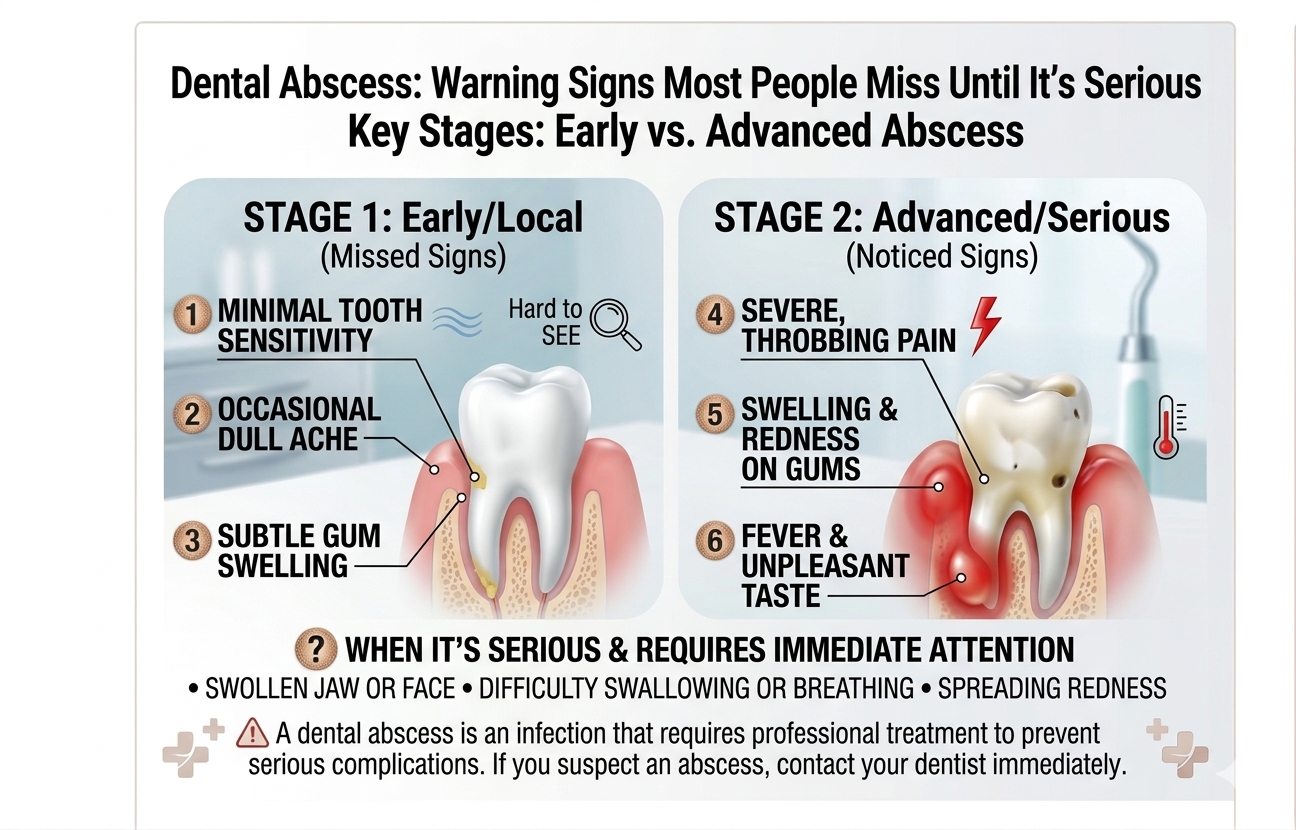
Dental Abscess: Warning Signs Most People Miss Until It’s Serious
A dental abscess is more than just a toothache—it’s a bacterial infection that can quietly worsen until it becomes a serious health concern. Many people ignore early symptoms because they seem minor or temporary. By the time the pain becomes severe, the infection may already require urgent care from an emergency dentist. If you are in the Georgetown area and need prompt dental attention, the team at Guelphview Dental provides same-day emergency care to help you get relief quickly.
Understanding the early warning signs and acting quickly can make the difference between saving and losing a tooth.
What Is a Dental Abscess?
A dental abscess is a pocket of pus caused by bacteria entering the tooth or gums. This often happens when a cavity, crack, or gum infection is left untreated.
There are three common types:
- Periapical abscess: forms at the tip of the tooth root
- Periodontal abscess: affects the gums and supporting structures
- Gingival abscess: limited to the surface of the gum
Each type can progress if ignored, eventually causing pain, swelling, and spreading infection.
Why Early Symptoms Are Often Ignored
One of the biggest dangers of a dental abscess is how easily it can be overlooked in the beginning. Unlike sudden dental injuries, abscesses usually develop slowly.
People often delay seeing an emergency dentist because:
- The pain is mild or comes and goes
- Symptoms feel similar to sensitivity
- There’s no visible swelling at first
- Painkillers temporarily reduce discomfort
This delay allows bacteria to multiply and the infection to deepen.
Subtle Warning Signs You Shouldn’t Ignore
Recognizing early symptoms can prevent serious complications and reduce the need for invasive treatment.
Lingering Tooth Sensitivity
If your tooth remains sensitive after exposure to hot or cold foods, it may signal internal damage or infection.
Mild but Recurring Pain
A dull ache that disappears and returns is often an early indicator that something is wrong beneath the surface.
Gum Tenderness or Small Swelling
A small bump on the gums may look harmless, but it can be a sign of pus buildup. Routine dental cleaning and prevention appointments can help catch these early signs before they progress.
Unpleasant Taste in the Mouth
A persistent bad taste can occur when an abscess begins to drain.
Slight Swelling in the Face
Even minimal swelling around the jaw or cheek should be taken seriously.
When the Condition Becomes Serious
As the infection progresses, symptoms become more intense and harder to ignore.
- Severe, throbbing pain
- Swelling in the face or jaw
- Fever and fatigue
- Difficulty chewing or opening the mouth
- Pain spreading to the ear or neck
At this stage, immediate attention from an emergency dentist is essential. Waiting longer increases the risk of complications. According to Health Canada, dental abscesses are among the top five dental issues that lead to preventable emergency department visits across Canada, underscoring why timely dental care matters.
What Happens If You Delay Treatment?
A dental abscess will not heal on its own. Without treatment, the infection can spread beyond the tooth.
Possible complications include:
- Damage to surrounding bone and tissue
- Tooth loss
- Spread of infection to the jaw or sinuses
- Formation of larger abscesses
- In rare cases, life-threatening infection
Seeking urgent dental care early helps prevent these outcomes and protects overall health.
When to See an Emergency Dentist
You should not wait if you notice:
- Persistent or worsening tooth pain
- Swelling in your gums, face, or jaw
- A pimple-like bump on the gums
- Fever along with dental discomfort
- Difficulty eating, speaking, or swallowing
Many clinics provide same day dental appointments to address infections quickly and relieve pain. At Guelphview Dental, our emergency dental service is available to Georgetown residents for fast, compassionate care.
How a Dental Abscess Is Treated
The goal of treatment is to remove the infection, relieve pain, and prevent further spread.
Drainage of the Abscess
The dentist may open the area to release pus and reduce pressure.
Root Canal Treatment
This removes infected tissue from inside the tooth and helps preserve it. Our root canal therapy service uses modern, gentle techniques to save your natural tooth and eliminate infection comfortably.
Tooth Extraction
If the tooth cannot be saved, it may need to be removed to stop the infection. Our tooth extraction service provides safe, gentle removal with detailed aftercare guidance.
Dental Crowns After Treatment
Following root canal treatment, a crown is often placed to protect and restore the tooth. Learn more about our dental crowns and bridges service for durable, natural-looking restorations.
Antibiotics
Medication may be prescribed to control bacterial spread, especially in advanced cases.
Prompt care increases the likelihood of saving the tooth and reduces recovery time.
How to Prevent a Dental Abscess
Prevention is the most effective way to avoid pain and emergency treatment.
Maintain Daily Oral Hygiene
Brush your teeth twice a day and floss regularly to remove plaque and bacteria. The Government of Canada’s oral health guidance also recommends checking your gums and teeth regularly and seeing an oral health professional promptly if you notice any concerns.
Don’t Ignore Early Symptoms
Address cavities, sensitivity, or gum issues before they worsen.
Visit Your Dentist Regularly
Routine checkups help detect problems early, often before symptoms appear. Our family dentistry team provides comprehensive care for patients of all ages, making it easy for the whole family to stay on top of their oral health.
Limit Sugary Foods
Reducing sugar intake lowers the risk of tooth decay.
Protect Your Teeth
Avoid habits that can damage enamel, such as chewing hard objects.
Why Early Action Matters
Early treatment not only reduces pain but also prevents more complex procedures. Many patients who seek help at the first sign of discomfort avoid extractions and extensive treatments. For a full overview of all available treatments, visit our dental services page.
Delaying care often leads to:
- Increased treatment complexity
- Higher costs
- Longer recovery time
- Greater risk of complications
Seeing an emergency dentist at the right time can save both your tooth and your health.
Common Misconceptions About Dental Abscesses
“It will go away on its own”
A dental abscess requires professional treatment. It will not heal without intervention.
“Painkillers are enough”
Pain relief only masks symptoms and does not treat the infection.
“No pain means no problem”
Some abscesses cause minimal discomfort at first, but the infection is still present.
“Antibiotics alone will fix it”
While helpful, antibiotics do not remove the source of infection.
Long-Term Impact on Oral Health
If left untreated, a dental abscess can affect more than just one tooth. It can weaken surrounding teeth, damage gum tissue, and impact overall oral health. Canada’s oral health experts at Health Canada emphasize that maintaining good oral hygiene and seeking professional care are essential to preventing long-term dental complications.
Over time, repeated infections may lead to:
- Chronic dental problems
- Increased sensitivity
- Difficulty chewing
- Ongoing discomfort
Preventing and treating abscesses early supports long-term dental health and comfort.
Key Takeaways
- A dental abscess is a serious infection that can worsen quickly
- Early signs are often mild and easy to overlook
- Ignoring symptoms can lead to serious complications
- Prompt care from an emergency dentist is essential
- Good oral hygiene and regular checkups help prevent abscesses
Frequently Asked Questions
Q1. Is a dental abscess always painful?
Not always. Some abscesses begin with mild or occasional discomfort before becoming severe.
Q2. How fast can a dental abscess spread?
It can worsen over a few days or weeks, depending on the severity and your overall health.
Q3.Can I wait a few days before seeing a dentist?
It’s not recommended. Early treatment reduces the risk of complications.
Q4. What should I do if swelling increases suddenly?
Seek immediate care from an emergency dentist, especially if swelling affects breathing or swallowing.
Q5. How can I reduce the risk of future abscesses?
Maintain good oral hygiene, treat dental issues early, and attend regular dental checkups. You can also review our FAQs page or about us page to learn more about how we support your long-term oral health.
About the Author
This article is written by a dental content specialist dedicated to creating accurate, clear, and patient-focused oral health information. The content is based on current clinical practices and aims to help readers recognize warning signs early and make informed decisions about their dental care.