
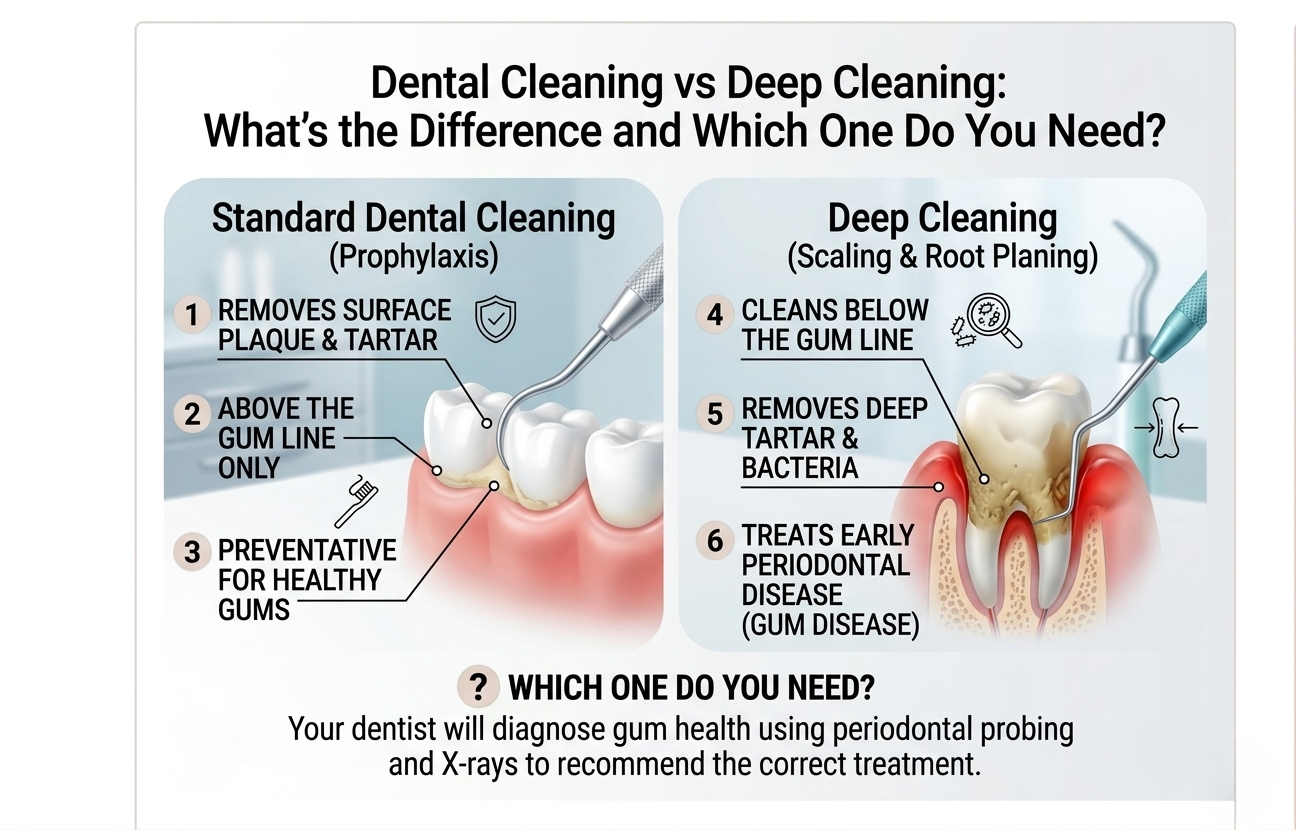
Dental Cleaning vs Deep Cleaning: What’s the Difference and Which One Do You Need?
Maintaining a healthy smile starts with regular dental cleaning, but many people are unsure whether they need a routine cleaning or a more advanced deep cleaning. This confusion can lead to delayed treatment, higher costs, and worsening oral health conditions.
we’ll clearly explain the difference between dental cleaning vs deep cleaning, their benefits, and how to determine which option is right for you.
What Is the Difference Between Dental Cleaning and Deep Cleaning?
Dental cleaning is a routine preventive procedure that removes plaque and tartar from above the gumline, while deep cleaning is a specialized treatment designed to treat gum disease by cleaning below the gumline and smoothing tooth roots.
In simple terms:
- Dental cleaning = prevention
- Deep cleaning = treatment
Understanding this difference helps you book the right teeth cleaning appointment and avoid unnecessary complications.
Why Regular Dental Cleaning Is Essential for Oral Health
Key Benefits of Dental Cleaning
- Prevents cavities and tooth decay
- Reduces the risk of gum disease
- Removes hardened tartar buildup
- Freshens breath and improves oral hygiene
- Enhances the appearance of your smile
What Happens During a Teeth Cleaning Appointment?
A routine teeth cleaning appointment is a straightforward and comfortable process designed to keep your teeth and gums healthy.
Step-by-Step Process
- Initial Examination – Your dentist or hygienist checks your teeth and gums
- Scaling – Removal of plaque and tartar from the tooth surface
- Polishing – Teeth are polished to remove stains and smooth the surface
- Flossing – Cleaning between teeth for better hygiene
- Fluoride Treatment (Optional) – Strengthens enamel and prevents decay
Most teeth cleaning sessions take about 30 to 60 minutes and require no downtime.
We also use digital X-rays during your exam to detect any hidden issues early, ensuring a thorough and complete assessment.
What Is Deep Cleaning (Scaling and Root Planing)?
Deep cleaning is a non-surgical procedure used to treat gum disease (periodontitis). It goes beyond standard dental cleaning by targeting bacteria below the gumline.
What Happens During Deep Cleaning?
- Removal of plaque and tartar from deep pockets under the gums
- Smoothing of tooth roots to help gums reattach
- Use of local anesthesia for comfort
- Treatment may be completed over multiple visits
Deep cleaning is essential when gum disease has progressed and cannot be managed with routine teeth cleaning.
In advanced cases where gum disease has caused significant damage, our team may also discuss tooth extraction or dental implants as restorative options to restore function and confidence.
Signs You Need a Dental Cleaning
You likely need a routine dental cleaning if:
- It has been more than 6 months since your last visit
- You notice mild plaque buildup
- Your teeth look slightly stained
- You want to maintain oral hygiene and prevent issues
Regular teeth cleaning appointments are ideal for keeping your smile healthy and avoiding dental problems.
Our family dentistry team in Georgetown welcomes patients of all ages for routine cleaning appointments — no referral needed.
Signs You May Need Deep Cleaning
- Bleeding gums while brushing or flossing
- Persistent bad breath
- Swollen, red, or tender gums
- Gum recession (gums pulling away from teeth)
- Loose teeth or sensitivity
What Happens If You Delay Dental Cleaning?
Delaying your teeth cleaning appointment can have serious consequences for your oral health.
Progression of Dental Problems
- Plaque accumulates on teeth
- Plaque hardens into tartar
- Tartar irritates gums, causing gingivitis
- Untreated gingivitis develops into periodontitis
- Deep cleaning or advanced treatment becomes necessary
Regular dental cleaning helps break this cycle early and prevents complications.
If you are already experiencing pain or swelling, do not wait — our emergency dental team offers same-day appointments in Georgetown to provide fast, compassionate relief.
Cost Comparison: Which Option Is More Affordable in 2026?
- Dental cleaning: Lower cost, preventive, often covered by insurance
- Deep cleaning: Higher cost due to complexity and multiple visits
Dental Cleaning vs Deep Cleaning: Key Differences
Feature | Dental Cleaning | Deep Cleaning |
Purpose | Preventive care | Treat gum disease |
Area cleaned | Above gumline | Below gumline |
Procedure type | Routine | Advanced |
Pain level | Minimal | Mild to moderate |
Frequency | Every 6 months | As needed |
Cost | Affordable | Higher |
This comparison helps you understand which type of dental cleaning is appropriate for your situation.
Is Deep Cleaning Painful?
Many patients worry about discomfort during deep cleaning. While it is more intensive than routine teeth cleaning, modern techniques make the procedure manageable.
- Local anesthesia is used to reduce discomfort
- Mild soreness may occur after treatment
- Recovery is typically quick with proper care
Your dental provider will ensure your comfort throughout the procedure.
For patients with dental anxiety, our children dentistry and general care teams use the same gentle techniques and calming approach for patients of all ages.
2026 Trend: Preventive Dentistry & AI-Driven Dental Care
In 2026, dental care is becoming more proactive and technology-driven. Preventive dental cleaning is now a major focus in modern dentistry.
Key Trends
- Increased awareness of oral hygiene and early intervention
- Growing demand for affordable dental cleaning
- AI-based dental diagnostics and monitoring
- Personalized teeth cleaning appointment scheduling
- Digital reminders and patient education tools
These advancements help patients stay consistent with their teeth cleaning routine and avoid serious conditions.
At Guelphview Dental, we embrace modern technology including digital X-rays and oral cancer screening with VELscope® to deliver proactive, technology-driven care to our Georgetown patients.
Tips to Maintain Oral Health Between Cleanings
- Brush twice daily with fluoride toothpaste
- Floss regularly to remove plaque between teeth
- Use an antibacterial mouthwash
- Limit sugary and acidic foods
- Stay hydrated to maintain saliva flow
- Schedule regular teeth cleaning appointments
When Should You See a Dentist?
- Gum health and inflammation
- Plaque and tartar buildup
- Pocket depth around teeth
- Signs of infection or gum disease
Frequently Asked Questions
Q1. How often should I get a dental cleaning in 2026?
Most patients should schedule a dental cleaning every 6 months, although some may need more frequent visits depending on their oral health.
Q2. Can dental cleaning remove tartar completely?
Yes, professional teeth cleaning removes plaque and tartar that cannot be eliminated through regular brushing and flossing.
Q3. Is deep cleaning necessary for everyone?
No, deep cleaning is only required if gum disease is present. Routine dental cleaning is sufficient for healthy gums.
Q4. How long does a teeth cleaning appointment take?
A standard teeth cleaning appointment usually takes 30–60 minutes, depending on your oral condition.
Q5. Is affordable dental cleaning available in 2026?
Yes, many clinics offer affordable dental cleaning options to encourage preventive care and regular visits.
About the Author
Final Thoughts
Understanding the difference between dental cleaning vs deep cleaning is essential for protecting your oral health. Routine teeth cleaning helps prevent dental issues, while deep cleaning is necessary for treating gum disease.
In 2026, preventive care is more important than ever.
Scheduling regular dental cleaning appointments can save you time, money, and discomfort in the long run.