
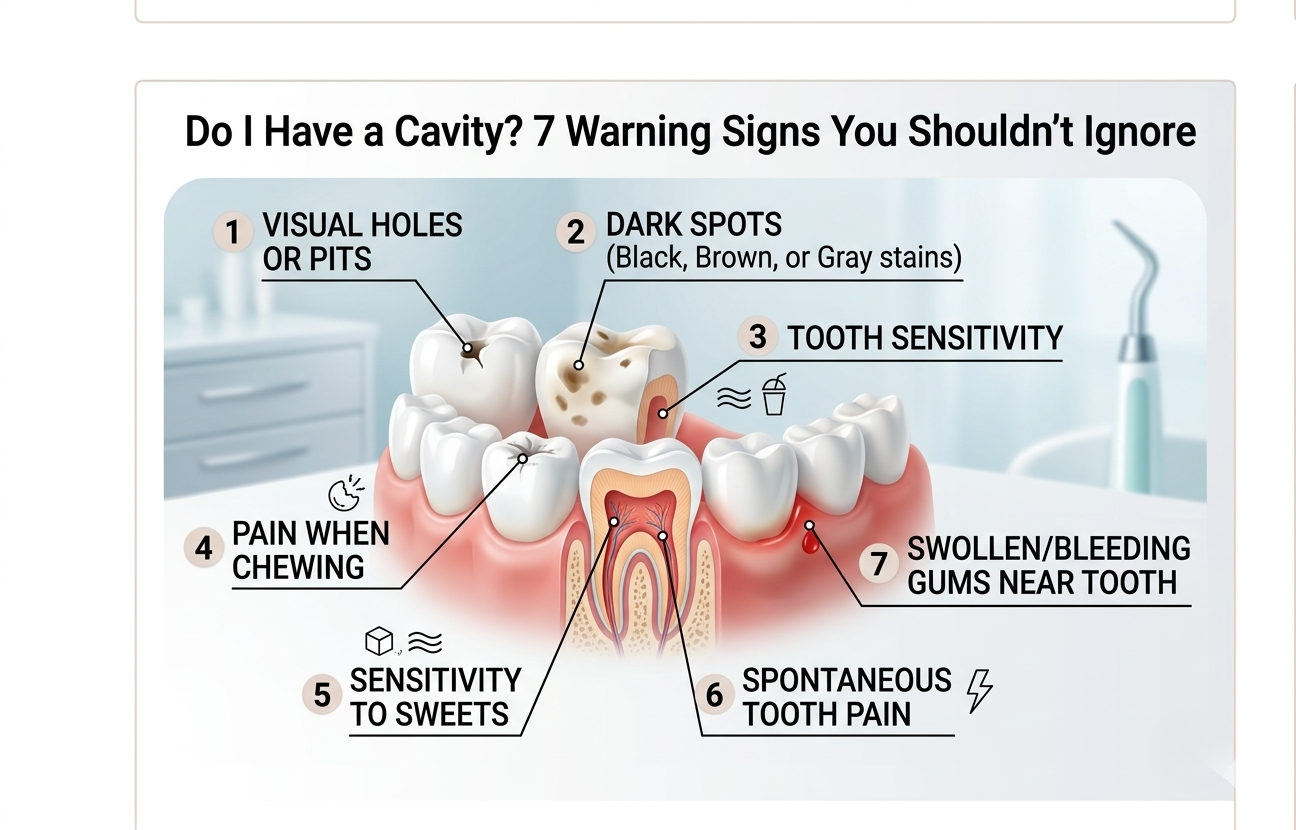
Do I Have a Cavity? 7 Warning Signs You Shouldn't Ignore
If you’ve ever asked yourself, “Do I have a cavity?”, you’re not alone. Cavity symptoms often begin with subtle signs that are easy to ignore—until they become painful, expensive, and harder to treat.
The truth is, many people don’t realize they have tooth decay until the cavity has already progressed. What starts as mild sensitivity or a small dark spot can quickly turn into a toothache, infection, or even a cracked tooth if left untreated.
According to Health Canada, cavities are caused when bacteria in plaque digest sugars from food and drinks, producing acid that attacks the tooth surface — making early awareness critical for every Canadian.
In this guide, we’ll cover the 7 most common cavity symptoms, explain how to know if you have a cavity, and help you understand when it’s time to book a dental exam at Guelphview Dental before the damage gets worse.
What Is a Cavity?
A cavity is a damaged area in the tooth caused by tooth decay. It develops when plaque bacteria feed on sugars and produce acids that slowly wear down tooth enamel.
Over time, that damage can create:
- Weak spots in the enamel
- Tiny holes in the tooth
- Deeper decay inside the tooth structure
- Pain, sensitivity, or infection
Cavities don’t always cause immediate pain. In fact, some of the most common early cavity signs are mild enough that patients often ignore them until the decay becomes more advanced. That’s why recognizing cavity warning signs early — and scheduling a dental cleaning and prevention check-up — can help you avoid more complex treatment later.
7 Warning Signs You May Have a Cavity
1. Tooth Sensitivity to Cold, Hot, or Sweet Foods
One of the earliest signs of a cavity is increased sensitivity when you eat or drink something cold, hot, or sugary.
You may notice:
- A quick sharp sensation when drinking cold water
- Discomfort when eating ice cream
- Pain after coffee or tea
- Sensitivity when eating candy or sweets
This happens because enamel begins to weaken, exposing the more sensitive inner layers of the tooth.
Why this matters
Sensitivity doesn’t always mean decay, but it is one of the most common tooth decay symptoms. If the discomfort is isolated to one tooth or is getting worse, visit our family dentistry team in Georgetown before a small cavity turns into a bigger problem.
2. A Toothache That Comes and Goes
A cavity doesn’t always cause severe pain right away. Sometimes the discomfort is mild, occasional, or only noticeable at certain times of the day.
Watch for:
- A dull ache in one tooth
- Random pain without an obvious cause
- Discomfort after meals
- Throbbing that comes and goes
Many people ignore this because the pain isn’t constant. But intermittent tooth pain is often one of the clearest cavity symptoms that decay may be spreading deeper into the tooth.
Why this matters
If the cavity reaches the dentin or gets close to the nerve, the pain usually becomes stronger and more frequent. Early treatment — such as our amalgam-free tooth-coloured fillings — can often prevent the need for more extensive restorative care.
3. A Visible Dark Spot, Hole, or Pit in the Tooth
Sometimes the answer to “How do I know if I have a cavity?” is something you can actually see.
Visible early cavity signs may include:
- A white chalky area on the enamel
- A brown or black spot on the tooth
- A small hole or pit
- A rough or damaged-looking groove
Not every stain is a cavity, but a visible change in the tooth surface should never be ignored.
Why this matters
A visible defect may mean the enamel has already been damaged. The earlier it’s treated, the more likely a dental crown or simple restoration can solve the problem.
4. Pain When Biting or Chewing
If you feel pain when chewing, especially in one specific area, it may be more than normal sensitivity.
This symptom can happen when:
- Decay has weakened the tooth structure
- A cavity has formed between teeth
- The tooth surface has started to break down
- Pressure triggers pain in a damaged area
Why this matters
Pain while chewing is one of the more advanced cavity warning signs. It can mean the decay is affecting deeper layers of the tooth or that the tooth has become structurally compromised. Our dental services team at Guelphview Dental can evaluate and treat the issue before it worsens.
5. Food Keeps Getting Stuck in the Same Spot
This is one of the most overlooked signs of a cavity, but it’s surprisingly common.
If food repeatedly gets trapped:
- Between the same two teeth
- In one groove on a molar
- Around a rough or chipped area
- In a spot that feels hard to floss
…there may be a cavity changing the shape of the tooth.
Why this matters
When tooth decay creates a rough edge, hole, or weak point, food can collect there more easily. This can worsen the decay and increase your risk of gum irritation, bad breath, and discomfort. A dental cleaning in Georgetown can help detect and address these problem areas early.
6. Persistent Bad Breath or a Bad Taste in Your Mouth
Bad breath doesn’t always mean you need to brush better. Sometimes it can be linked to a hidden cavity.
A cavity can trap:
- Food particles
- Plaque bacteria
- Acids and debris
- Decayed material inside a damaged area
This may cause:
- Bad breath that keeps coming back
- A sour or unpleasant taste
- Odour around one specific tooth when flossing
Why this matters
Persistent bad breath combined with other tooth decay symptoms may point to a cavity or another dental issue that needs professional evaluation. Book an appointment and review our frequently asked questions for more information about what to expect at your visit.
7. A Chipped, Weak, or Rough Tooth
Sometimes a tooth doesn’t chip because of trauma—it chips because decay has weakened it.
You may notice:
- A rough edge with your tongue
- A small piece of tooth breaking off
- A tooth that feels weaker than before
- A surface that suddenly feels uneven
Why this matters
This is often a sign that the cavity has already affected the strength of the tooth. When decay weakens enamel, the tooth can fracture more easily under normal chewing pressure. In severe cases, a tooth extraction may be necessary, but early treatment significantly reduces this risk.
How to Know If You Have a Cavity vs. Normal Sensitivity
A lot of patients ask: “Is it just sensitivity, or is it a cavity?”
Here’s a simple way to think about it:
It may be normal sensitivity if:
- It happens occasionally
- It affects multiple teeth
- It improves with sensitivity toothpaste
- There’s no visible damage or pain when chewing
It may be a cavity if:
- The discomfort is in one specific tooth
- The sensitivity is getting worse
- There’s pain when chewing
- You notice a spot, hole, or rough area
- Food keeps getting trapped in the same place
If you’re unsure, the safest answer is to get a dental exam. The Canadian Health Measures Survey (Statistics Canada) found that tooth decay rates remain unchanged in Canada, making regular professional screening more important than ever. A quick check and X-ray can often detect early cavity signs before the problem becomes more serious.
What Happens If You Ignore a Cavity?
Cavities don’t go away on their own once the tooth structure has been damaged.
If left untreated, a cavity may lead to:
- Deeper tooth decay
- Severe tooth pain
- Infection or swelling
- A cracked or broken tooth
- Root canal treatment to save the infected tooth
- Tooth loss in advanced cases — potentially requiring
- dental implants to restore your smile
This is why recognizing cavity symptoms early is so important. Small cavities are usually simpler and more affordable to treat than advanced tooth decay.
What Should You Do If You Think You Have a Cavity?
If you notice any of these cavity warning signs, don’t wait for severe pain.
What to do next:
- Schedule a dental exam at Guelphview Dental as soon as possible
- Avoid sugary snacks and acidic drinks
- Brush twice daily with fluoride toothpaste
- Floss carefully around the area
- Avoid chewing on the painful side if it hurts
The earlier a cavity is diagnosed, the better your chances of needing only conservative treatment. Our family-friendly team at Guelphview Dental in Georgetown, Ontario is here to help you every step of the way.
Frequently Asked Questions
Q1. What are the first signs of a cavity?
The first signs of a cavity often include sensitivity to hot, cold, or sweet foods, mild tooth discomfort, and visible white, brown, or dark spots on the tooth.
Q2. Can you have a cavity without pain?
Yes. Many early cavities cause little to no pain at first. That's why early cavity signs like sensitivity, rough spots, or trapped food are important to notice. Our dental cleaning and prevention services can catch these early.
Q3. How do I know if I have a cavity or just tooth sensitivity?
If the sensitivity is in one specific tooth, gets worse over time, or happens along with chewing pain, dark spots, or a visible hole, it may be a cavity rather than general sensitivity.
Q4. Will a cavity go away if I brush more?
No. Once a true cavity forms, it won't heal on its own. Brushing helps prevent further decay, but established cavities usually need professional dental treatment.
Q5. When should I see a dentist for cavity symptoms?
You should see a dentist as soon as you notice persistent sensitivity, toothache, pain when chewing, visible tooth damage, or any other ongoing cavity warning signs. Contact Guelphview Dental to book your appointment today.
About the Author
This article was created by the dental content team at Guelphview Dental, committed to providing accurate, easy-to-understand oral health information based on real clinical topics patients commonly experience. Our goal is to help Georgetown, Ontario residents make informed decisions about their dental care through clear, trustworthy, and practical guidance.
Final Thoughts
If you’ve been wondering, “Do I have a cavity?”, your mouth may already be giving you clues.
From tooth sensitivity and chewing pain to dark spots, bad breath, and food trapping, these common cavity symptoms should never be ignored. Even mild tooth decay symptoms can become more serious if you wait too long.
The good news is that early treatment can often stop the problem before it becomes painful or more expensive to fix. According to the Canadian Dental Association, dental caries (tooth decay) is the most widespread chronic condition affecting Canadians — yet it is largely preventable with regular care and early intervention.
If you’re noticing any of these signs of a cavity, booking a dental visit at Guelphview Dental sooner rather than later is the smartest next step. We welcome new patients and offer same-day emergency appointments at our Georgetown, Ontario clinic.